
Best Potty Training Products for Toddlers 2026
September 4, 2026 · ParentRankings Editors
Our Top Pick
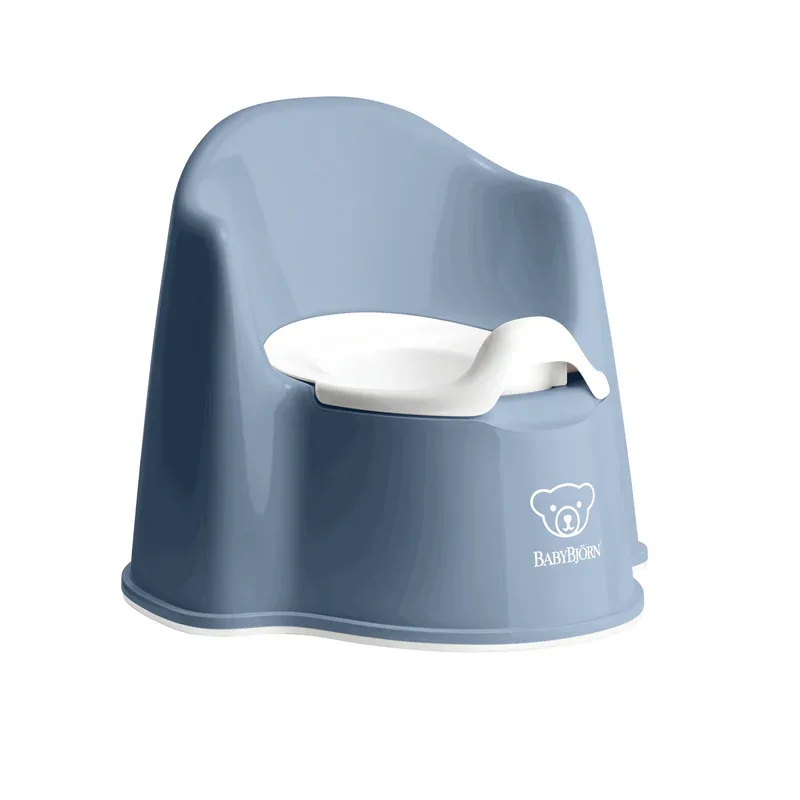
BabyBjörn Potty Chair
The BabyBjörn Potty Chair earns the top spot because its seamless pop-out bowl makes cleanup faster than any competitor, its wide anti-slip base stays put under even the most forceful toddler sit-downs, and its backrest keeps kids comfortable enough to actually stay seated long enough to succeed.
On December 10, 2025, the UK's Department for Education and Department of Health and Social Care jointly endorsed a new national potty training guide recommending children transition out of nappies between 18 and 30 months. That is not a radical new finding. Early childhood specialists have been saying this for years. What makes it significant is the official backing: two major government departments, aligned on a single window, publishing guidance that millions of families will now encounter through health visitors, daycare providers, and pediatric appointments. If your toddler is somewhere in that 18-to-30-month range right now, this moment is your signal. Not to panic, but to get organized.
Here is what we have noticed after years of covering this category: most parents do not fail at potty training because they chose the wrong strategy. They fail because they started with the wrong equipment, hit a frustrating week, and lost momentum before the process had a real chance to work. A potty that is hard to clean becomes a potty you avoid. A potty that wobbles becomes a potty your toddler refuses to sit on. A potty that lives in one bathroom when your 22-month-old has approximately four seconds of advance notice is, functionally, no potty at all. The gear matters more than parents expect, and it matters in very specific, practical ways.
We tested and ranked the five best potty training products available in 2026 across five criteria: ease of cleaning, stability, child appeal, value, and daycare compatibility. Our picks cover a range of budgets and use cases, from a single workhorse product for home use to a fold-flat option built for families constantly moving between environments. What they all have in common is that they earned their spots by performing in real conditions, not just looking good in a product photo.
What to Look for in a Potty Training Product
Ease of cleaning is the criterion we weighted most heavily, and we make no apologies for that. During active training, you are emptying and rinsing a potty multiple times a day, every day, for weeks. A design with seams, hinges, or joints inside the bowl is not just inconvenient. It becomes genuinely unsanitary fast, because waste works its way into every crevice that exists and does not come out with a quick rinse. The best potties have seamless inner bowls that pop out in a single motion and can be rinsed clean in under ten seconds. That is the standard we held every product to, and it is the first thing we recommend you look at before buying anything.
Stability and safety matter more than most product listings let on. Toddlers do not gently lower themselves onto a potty. They drop, they shift, they lean, and they occasionally try to stand up mid-process. A wide, low base with anti-slip feet is not a nice-to-have. It is the difference between a child who builds confidence with each successful sit and a child who had one scary wobble and now refuses to go near the thing. We tested every product on tile and hardwood, the two surfaces where slipping is most likely, and scored stability accordingly. A potty that tips is a potty that sets your training back by weeks.
Child appeal is the criterion that surprises parents most when we explain how seriously we take it. Motivation is one of the most underrated variables in how quickly training actually progresses. A toddler who is excited to use the potty, who asks to go, who treats it as something they own rather than something being imposed on them, trains faster. Full stop. Features that drive this vary by child: some toddlers respond to a realistic toilet shape they can imitate, some to a design small enough that they feel in control of it, some to a flushing sound that makes the whole ritual feel satisfying. We scored child appeal as its own dimension because a technically excellent potty that your child refuses to sit on is not an excellent potty.
Value and versatility are worth thinking about together, because the most cost-effective products in this category are not necessarily the cheapest ones. A product that functions as a standalone potty, a toilet seat reducer, and a step stool covers three stages of training without requiring three separate purchases. A product that works at home and folds flat for travel means you are not buying a second unit for the diaper bag. When we assessed value, we looked at total cost across the training arc, not just the sticker price. A $35 product that replaces three $15 purchases is genuinely better value, and we scored it that way.
Daycare compatibility is a criterion we added specifically because of how many families are now coordinating training across two environments simultaneously. The research is consistent: consistency between home and daycare is one of the strongest predictors of how quickly training clicks. When a child is using a completely different setup at school than at home, they have to relearn the physical routine every time they switch environments, and that slows everything down. Products that fold flat for a diaper bag, or that are inexpensive enough to keep one at each location, solve this problem in a straightforward way. We flagged daycare compatibility explicitly for every product in our lineup because for many families, it is the deciding factor.
Who Should Buy
If you want the single best potty for home use and you are only buying one product, our top pick is the clear answer. Its seamless pop-out bowl, wide anti-slip base, and supportive backrest make it the most consistently reliable option for daily training at home. The backrest detail is one we kept coming back to: toddlers who are comfortable enough to stay seated long enough actually have a chance to succeed, and that sounds obvious until you watch a child squirm off an uncomfortable seat before anything happens. This is the product pediatric nurses have recommended for over a decade, and the reason is not brand recognition. It is that the design solves the right problems.
If your toddler splits time between home and daycare, or if your family is frequently on the move during the training period, our runner-up is the pick we would make. It folds flat into a diaper bag, unfolds into a standalone potty anywhere you need one, and converts to a full-size toilet seat reducer when your child is ready to make that transition. The versatility is genuine, not theoretical. Families who need one product that works in a daycare bathroom, a restaurant restroom, and a grandparent's house will find it covers all three without requiring any compromises. Yes, the folding mechanism means the base is slightly less rigid than a fixed standalone potty. That is the honest tradeoff, and for most portable-use scenarios, it is worth making.
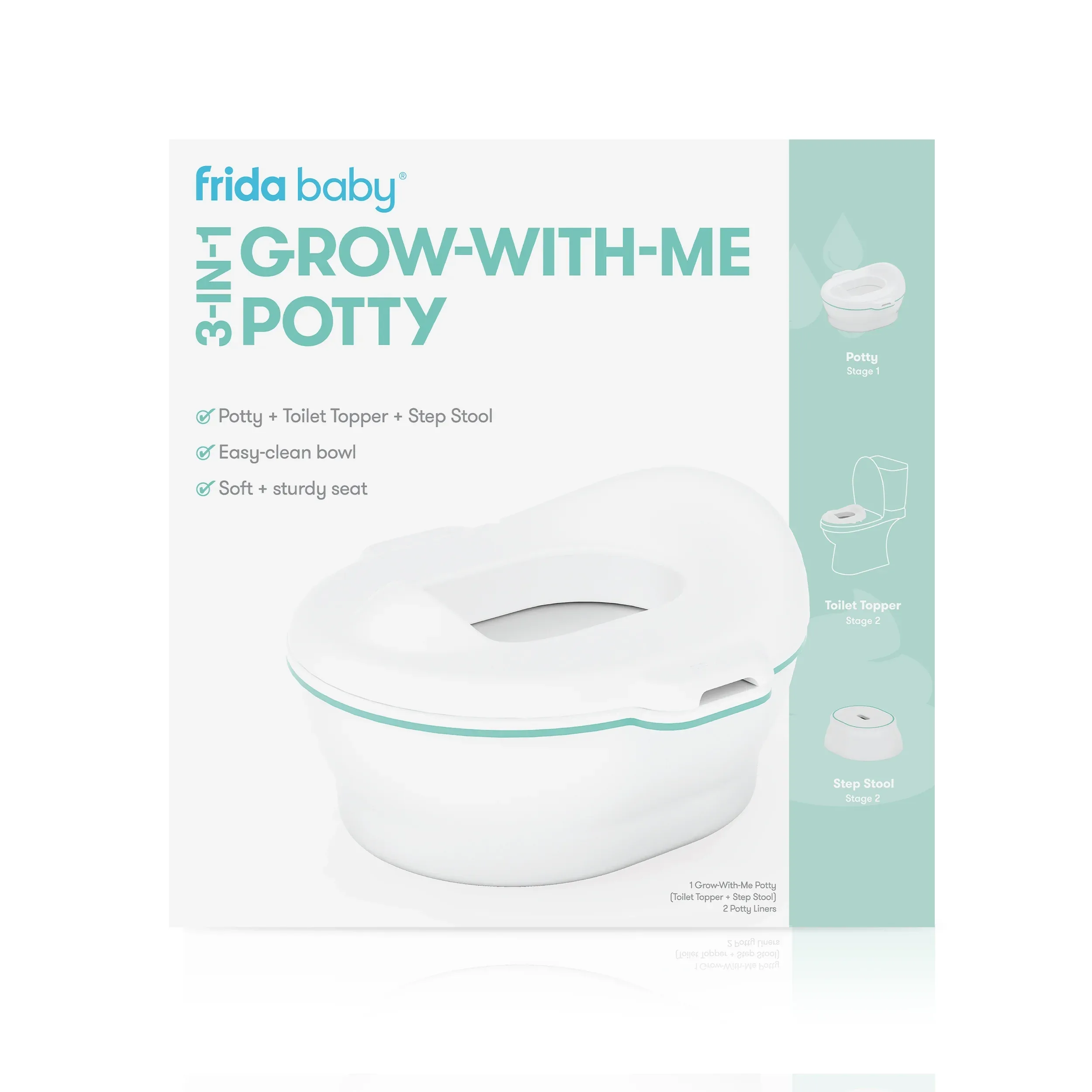
If you want to buy once and never think about potty-related purchases again, our best value pick is the one to get. Three configurations, one purchase: standalone potty for early training, toilet topper for the transition to the full-size toilet, and step stool for when your child is ready to climb up independently. The math is simple. Buying those three items separately costs more, takes up more storage space, and requires you to make three purchasing decisions at moments when you are already managing a toddler in active training. The tradeoff is that more components mean more seams, and more seams mean more diligent cleaning. It is not a dealbreaker, but it is the thing to know going in.
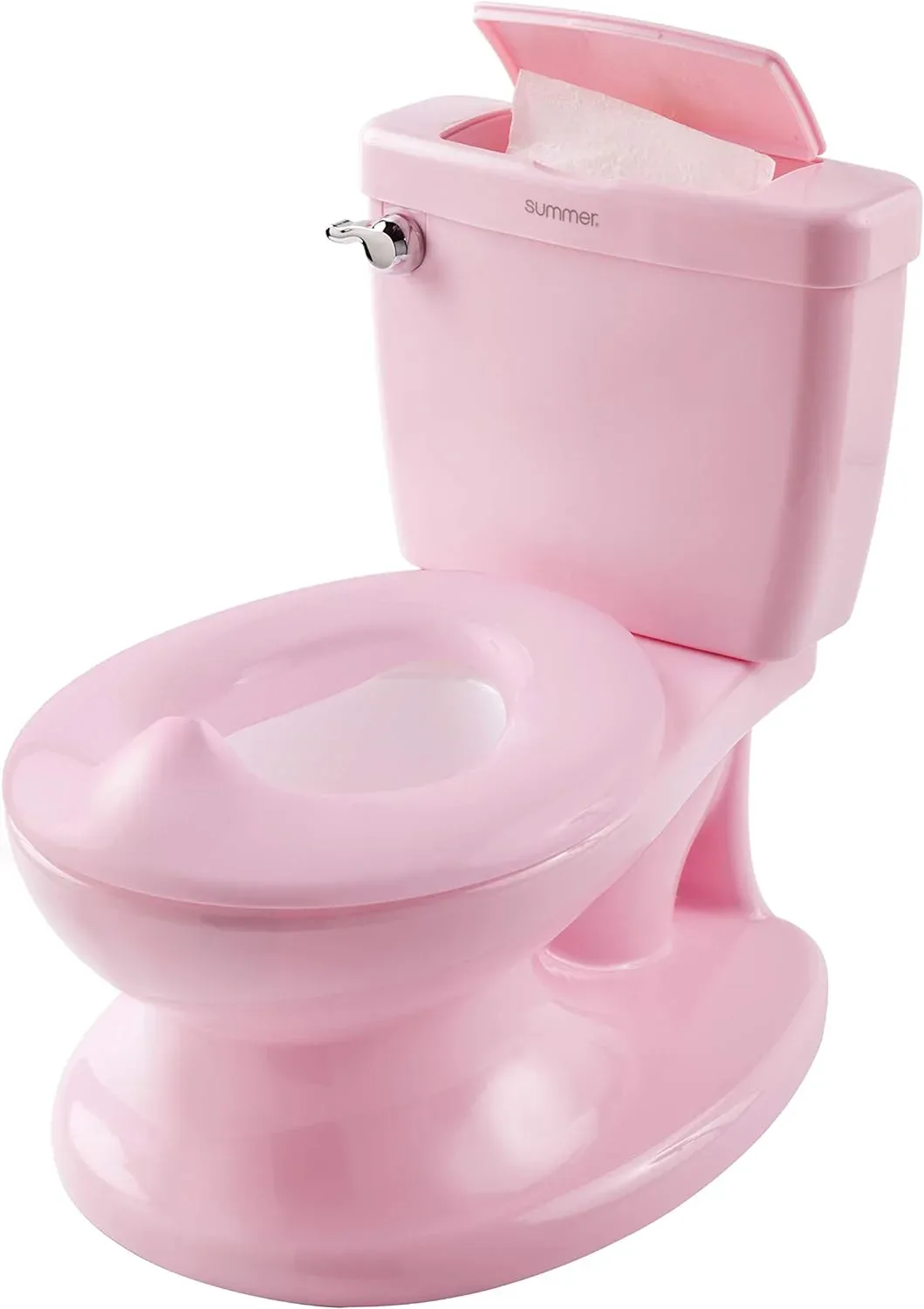
If your toddler is resistant and needs a reason to care about the potty at all, our imitation-focused pick scored highest on child appeal across our entire roundup. The realistic toilet shape, the working lid, the flushing sound: these features exist for a specific purpose, and that purpose is getting a reluctant toddler to sit down voluntarily. For children who are motivated by copying what adults do, this design works in a way that a simpler product simply does not. The cleaning is more involved because of the lid hinge and additional surface area, so it is not the pick for parents who are already dreading the maintenance side of training. But for the right child, it can be the thing that breaks a standoff.
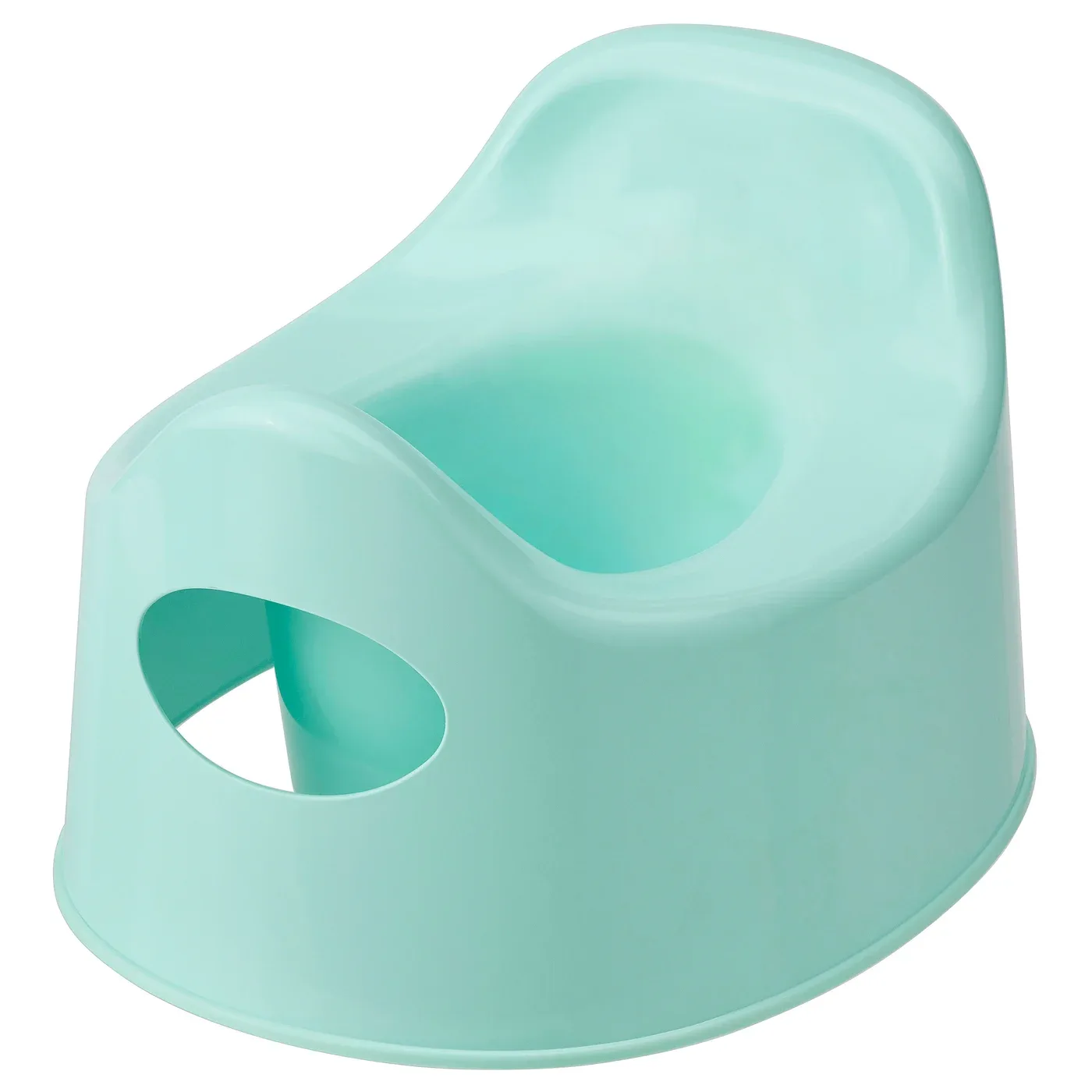
If your main goal is reducing accidents in the early weeks by making a potty always within reach, our budget pick is the most strategically useful product on this list. At $8, buying three or four and stationing them throughout your home is an affordable and genuinely effective approach. An 18-to-24-month-old may have only seconds of warning before needing to go. A potty that requires crossing the house is a potty that does not get used in time. There is no backrest and no ergonomic contouring, so it is not the product we would choose for a child who needs comfort and stability to build confidence. But as a volume play for the early-stage accident-reduction problem, nothing else on this list comes close to the value.
Whichever pick fits your situation, the most important thing is to start with the right setup before training begins rather than troubleshooting equipment mid-process. See all 5 Best Potty Training Products ranked at /category/potty-training-products.
More Picks We Love
Our full ranking, scored by our editorial team on safety, value, ease of use, and quality.
OXO Tot 2-in-1 Go Potty
The OXO Tot 2-in-1 is the best potty for families who need one product that works at home, in the car, at the park, and at daycare drop-off — it folds into a diaper bag, unfolds into a standalone potty, and converts to a full-size toilet seat reducer, all for $25.
Frida Baby 3-in-1 Potty Training System
The Frida Baby 3-in-1 is the smartest single purchase on this list — one product covers standalone potty, toilet topper, and step stool, meaning you will not need to buy anything else as your child moves through each stage of training.
Summer Infant My Size Potty
The Summer Infant My Size Potty is the right pick for toddlers who are motivated by imitation — the realistic toilet shape, working lid, and flushing sound make it the highest-scoring product on child appeal in our entire roundup.
IKEA LÄTTSAM Potty
At $8, the IKEA LÄTTSAM is not the most feature-rich potty on this list, but buying two or three to place in every bathroom — and one for the car — is a proven strategy for cutting accidents during early training when toddlers cannot always make it across the house in time.
Frequently Asked Questions
What age should I start potty training my toddler?▾
A national potty training guide endorsed by the UK's Department for Education and Department of Health and Social Care in December 2025 recommends children begin transitioning out of nappies between 18 and 30 months. Most pediatric guidance aligns with this window, though readiness signs — like showing interest in the toilet, staying dry for longer stretches, or communicating discomfort — matter more than a specific birthday. Starting before a child shows any readiness signs typically prolongs the process rather than shortening it.
Should I use a standalone potty chair or a toilet seat reducer?▾
Both work, and the best choice depends on your child and your home setup. Standalone potty chairs are lower to the ground, easier for toddlers to access independently, and less intimidating for children who are nervous about the full-size toilet. Toilet seat reducers are better for children who are already comfortable near the toilet and for families who want to skip the intermediate step. Products like the Frida Baby 3-in-1 and OXO Tot 2-in-1 offer both configurations, which is why they score well for families who are unsure which approach will work.
How do I coordinate potty training between home and daycare?▾
Consistency between environments is the single biggest factor in training speed when a child splits time between home and daycare. Talk to your daycare provider before you start so both settings are using the same language, schedule, and response to accidents. A portable option like the OXO Tot 2-in-1 Go Potty can help maintain familiarity when your child uses different bathrooms, and keeping a potty at daycare that matches the one at home reduces confusion for younger toddlers who rely heavily on visual cues.
How many potties do I need in my home during training?▾
Potty training specialists frequently recommend having more than one potty accessible during the early stages of training, particularly in larger homes. An 18- to 24-month-old may have only seconds of warning before needing to go, and having to cross the house to reach the bathroom leads to preventable accidents. The IKEA LÄTTSAM at $8 is specifically useful here — buying two or three to place in different rooms is an affordable strategy that meaningfully reduces accident frequency during the first few weeks.
Are potty training products with sounds and lights actually helpful?▾
For some toddlers, yes — particularly children who are motivated by imitation and novelty. The Summer Infant My Size Potty's flushing sound and realistic toilet shape scored highest on child appeal in our rankings precisely because these features make reluctant toddlers more willing to sit down and engage. However, the effect varies by child, and some toddlers find the sounds distracting or become focused on the feature rather than the task. If your child is already showing interest in the toilet, a simpler design like the BabyBjörn may be more effective.
Ready to compare all options?
See every potty training products ranked by our editors — scored on safety, value, ease of use, and quality.
See all 5 Best Potty Training Products ranked →