
Best Baby Breathing & Oxygen Monitors of 2026
We researched and evaluated the top baby breathing and oxygen monitors on accuracy, safety alerts, ease of use, and value.
Filter Results
Filter Results
Showing 5 of 5 results
- 1
9.4
Best Overall$299Best Overall
Best Overall
$299at Direct
- Clinically validated pulse oximetry tracks heart rate and blood oxygen levels
- Real-time alerts to phone and base station for abnormal readings
Clinically validated heart rate and oxygen monitoring for babies
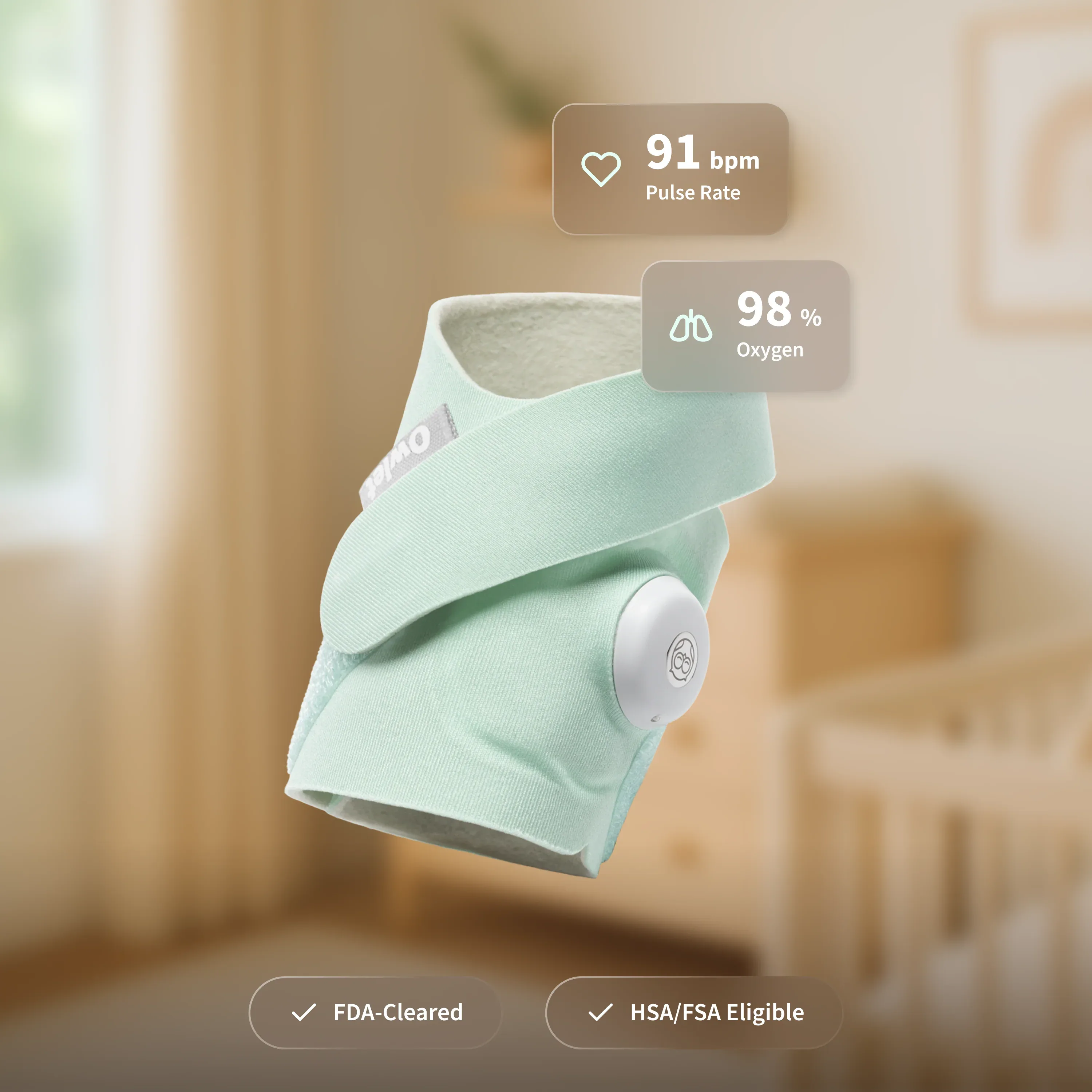
The Owlet Dream Sock is the gold standard in baby breathing monitors, using the same pulse oximetry technology as hospital monitors. It alerts parents to drops in heart rate or blood oxygen levels in real time — unmatched peace of mind for families with premature babies, heart conditions, or respiratory concerns.
Read the full Owlet Dream Sock review →Pros
- Clinically validated pulse oximetry tracks heart rate and blood oxygen levels
- Real-time alerts to phone and base station for abnormal readings
- Comfortable wearable sock fits babies ages 0–18 months
Cons
- Premium price compared to most monitors
- Sock must fit properly — may shift during active sleep
Score Breakdown
Safety9.9Value8.2Ease8.8Quality9.5Specs
- Type
- Wearable sock
- Monitoring
- Heart rate + blood oxygen (SpO2)
- Age Range
- 0–18 months
- Connectivity
- WiFi
- Alert Type
- App + base station
- 2
8.9
$499Best Contact-Free
Best Contact-Free
$499at Direct
- Contact-free breathing monitoring — no wearable or mattress pad needed
- Uses SafeSense radar technology to detect breathing from across the room
Breathing monitoring without touching your baby
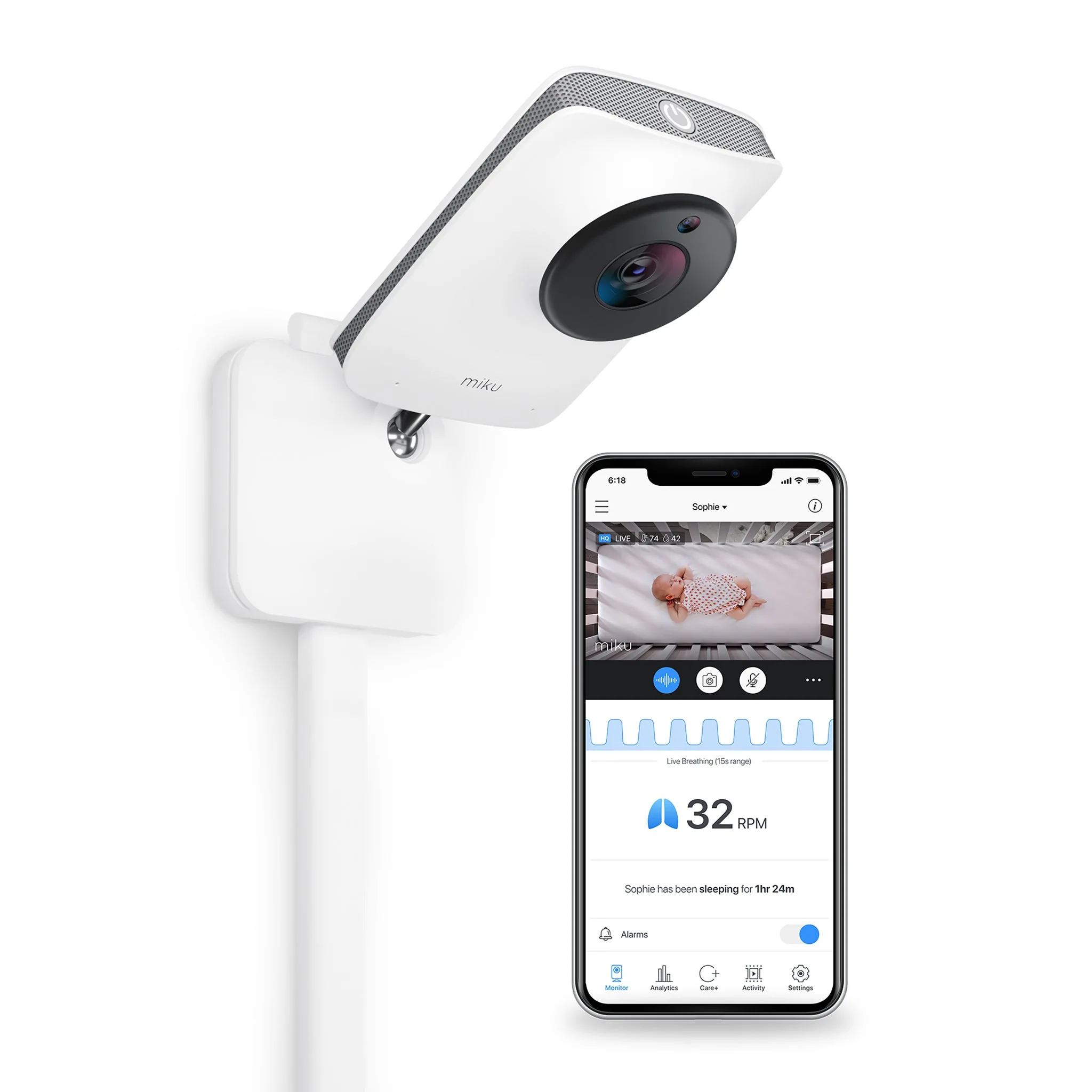
The Miku Pro uses radar-based SafeSense technology to detect your baby's breathing movement without any wearable or under-mattress sensor. It's the only truly contact-free breathing monitor with full HD video — ideal for parents who want monitoring without attaching anything to their baby.
Read the full Miku Pro Baby Monitor review →Pros
- Contact-free breathing monitoring — no wearable or mattress pad needed
- Uses SafeSense radar technology to detect breathing from across the room
- 1080p live video with crisp night vision built in
Cons
- Highest price point of any monitor on this list at $499
- Requires subscription for full historical data access
Score Breakdown
Safety9.5Value7.5Ease9.2Quality9.4Specs
- Type
- Contact-free camera
- Monitoring
- Breathing motion (radar)
- Age Range
- 0+ months
- Connectivity
- WiFi
- Resolution
- 1080p
- 3
8.5
$130Best Under-Mattress
Best Under-Mattress
$130at Direct
- Under-mattress sensor pad detects breathing movement without touching baby
- Sounds alarm if no movement detected for 20 seconds
Under-mattress movement sensor with video and two-way audio
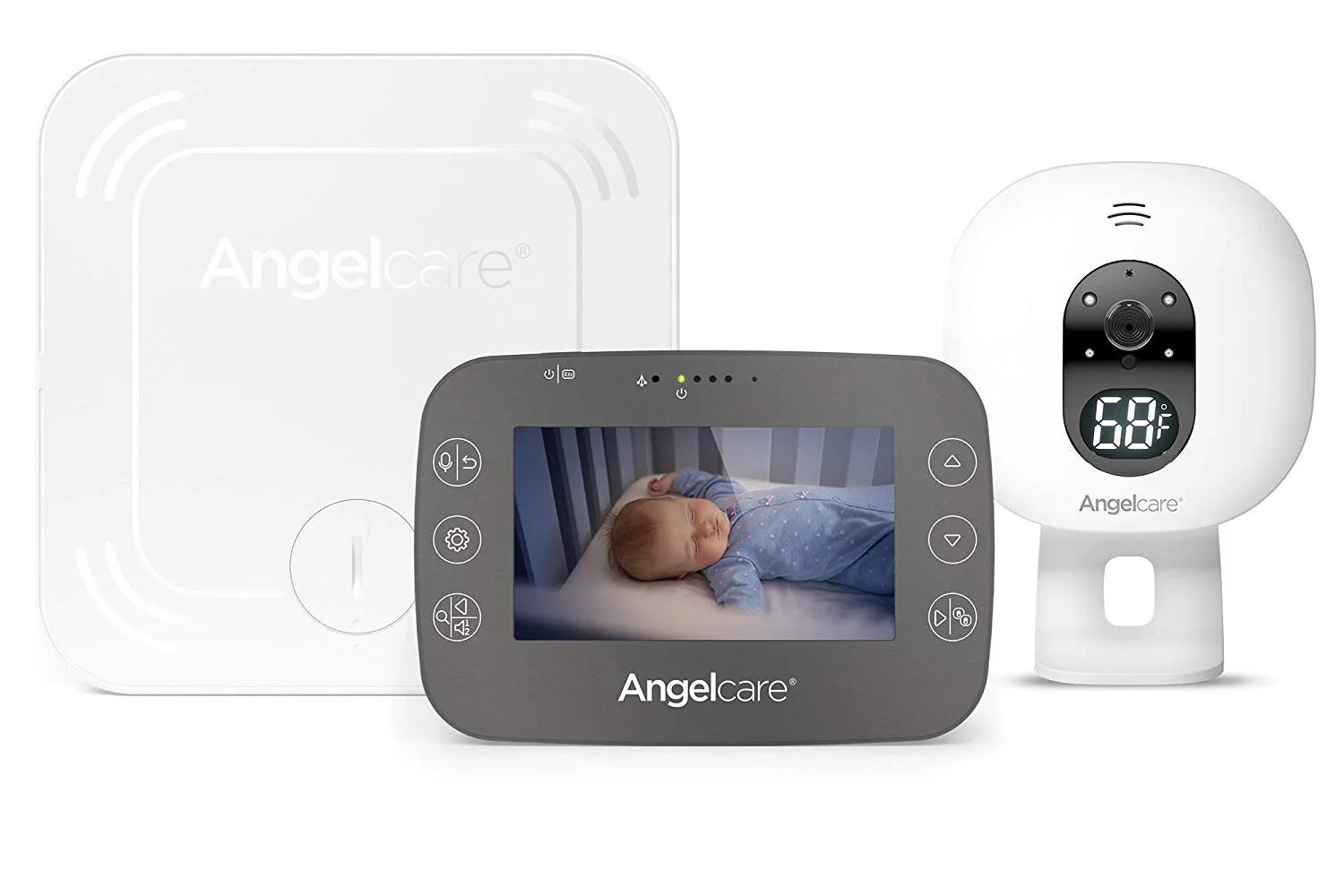
Angelcare has been a trusted name in infant breathing monitoring since the 1990s. The AC337 combines an under-mattress movement sensor with a full video monitor — reassurance without attaching anything to your baby. At $130, it offers meaningful peace of mind at a fraction of the Owlet's cost, though it detects motion rather than oxygen levels.
Read the full Angelcare AC337 review →Pros
- Under-mattress sensor pad detects breathing movement without touching baby
- Sounds alarm if no movement detected for 20 seconds
- Full video monitor with night vision and two-way audio included
Cons
- Movement sensor only — does not track heart rate or SpO2
- Sensor pad must fit snugly; may not work with all crib mattresses
Score Breakdown
Safety9.0Value9.1Ease8.5Quality8.4Specs
- Type
- Under-mattress pad + video monitor
- Monitoring
- Movement/breathing motion
- Age Range
- 0–24 months
- Connectivity
- DECT (no WiFi required)
- Alert Type
- Audible alarm + parent unit
- 4
8.3
$120Best Portable Wearable
Best Portable Wearable
$120at Direct
- Clips to diaper — works in any crib, bassinet, or travel bed
- Vibrates gently at 15-second pause; audible alarm at 20 seconds
Clip-on abdominal breathing monitor with no base station needed
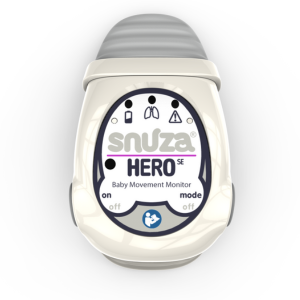
The Snuza Hero MD clips directly to your baby's diaper and monitors abdominal breathing movement. Its two-stage alert — a gentle vibration first to stimulate the baby, then an alarm — has made it a go-to for parents who travel or use multiple sleep spaces. No app, no WiFi, no complexity.
Read the full Snuza Hero MD review →Pros
- Clips to diaper — works in any crib, bassinet, or travel bed
- Vibrates gently at 15-second pause; audible alarm at 20 seconds
- No WiFi, no app required — fully self-contained
Cons
- No video or audio — breathing monitor only
- Requires diaper clip — may not work well in swaddled newborns
Score Breakdown
Safety8.8Value9.0Ease9.1Quality8.3Specs
- Type
- Clip-on wearable
- Monitoring
- Abdominal movement
- Age Range
- 0–12 months
- Connectivity
- Standalone (no WiFi)
- Alert Type
- Vibration + audible alarm
- 5
8.0
$99Best Budget Wearable
Best Budget Wearable
$99at Direct
- Tracks breathing motion, rollover alerts, and ambient temperature
- Clips to clothing — works across all sleep surfaces
Breathing, rollover, and temperature monitoring under $100
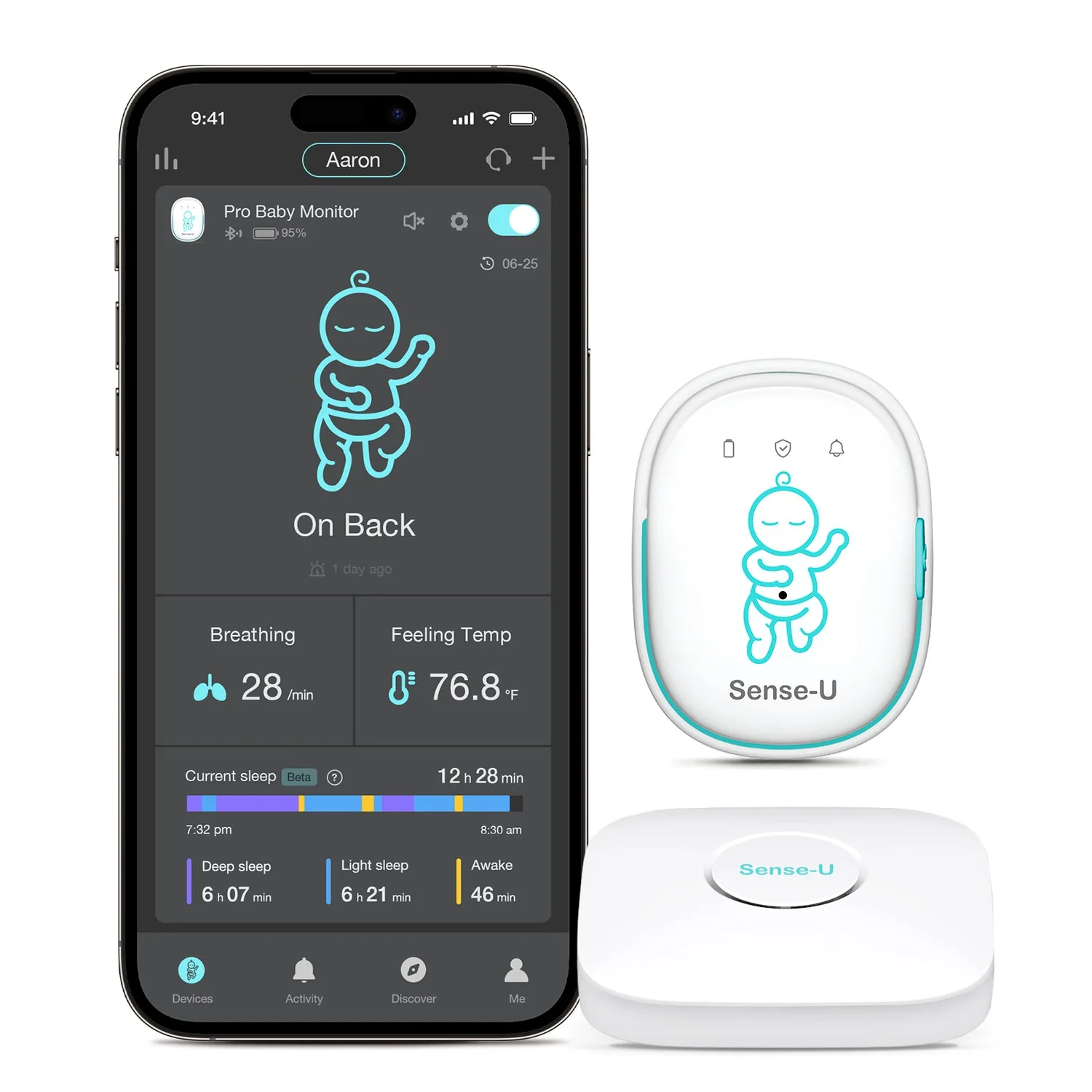
The Sense-U Baby Monitor 3 packs breathing motion detection, rollover alerts, and room temperature monitoring into a sub-$100 clip-on sensor. It's the best value option for parents who want wearable monitoring without the Owlet price tag — though it does not track heart rate or blood oxygen.
Read the full Sense-U Baby Monitor 3 review →Pros
- Tracks breathing motion, rollover alerts, and ambient temperature
- Clips to clothing — works across all sleep surfaces
- Under $100 with no subscription required
Cons
- No blood oxygen or heart rate monitoring
- App connectivity can be inconsistent on older phones
Score Breakdown
Safety8.5Value9.3Ease8.8Quality7.9Specs
- Type
- Clip-on wearable
- Monitoring
- Breathing motion + rollover + temperature
- Age Range
- 0–24 months
- Connectivity
- Bluetooth + WiFi
- Alert Type
- App notifications
Baby Breathing & O2 Monitors Buying Guide
Why consider a breathing monitor — and what it can’t do
First, the honest frame: the American Academy of Pediatrics does not recommend consumer breathing monitors as protection against SIDS — safe-sleep practices (back sleeping, a bare firm surface, room-sharing) are what the evidence supports. What these devices genuinely offer is information and reassurance: live readings and alerts that help anxious parents actually sleep. For many families that peace of mind is real value; it just must never replace safe-sleep habits or medical guidance.
What to look for
Safe-sleep habits first
A monitor supplements the AAP safe-sleep basics — it never substitutes for them. If a monitor’s marketing implies it prevents SIDS, that’s your signal to be skeptical of the whole pitch.
Wearable, under-mattress, or contact-free
Socks and clip-ons travel and read directly from the baby; under-mattress pads are wire-free in the crib; camera-based systems monitor without touching. Each type trades accuracy contexts, comfort, and price differently.
False-alarm behavior
A 2am false alarm is a cardiac event for the parents. Research how each device handles loose fit, wiggly sleepers, and signal loss — false-alarm frequency is the single biggest satisfaction factor.
What happens when Wi-Fi dies
Check which alerts work without internet, whether there’s a base-station alarm independent of your phone, and what the app requires. The failure mode you want is loud and local.
Subscription and data terms
Some monitors gate history and insights behind subscriptions, and all of them collect intimate data. Know the ongoing cost and the privacy policy before buying.
Medical needs are different
If your baby has a diagnosed condition needing real monitoring — prematurity, apnea — that calls for a prescribed medical device through your pediatrician, not a consumer wellness product. Ask the doctor which category your situation is.
Our shortlist of 5
- #1 Owlet Dream Sock — Best Overall
- #2 Miku Pro Baby Monitor — Best Contact-Free
- #3 Angelcare AC337 — Best Under-Mattress
- #4 Snuza Hero MD — Best Portable Wearable
- #5 Sense-U Baby Monitor 3 — Best Budget Wearable
Frequently Asked Questions
Do breathing monitors prevent SIDS?
No — and the American Academy of Pediatrics says so directly: consumer monitors are not recommended as a SIDS-reduction strategy, and no device substitutes for safe-sleep practices — baby on their back, on a firm bare surface, room-sharing in the early months. What monitors provide is data and reassurance. Buy one for peace of mind if that helps your family sleep; keep the safe-sleep habits either way.
Are these monitors medical devices?
Most are consumer wellness products, not prescribed medical equipment, though some devices have obtained FDA clearances for specific tracking functions — check the current status of any model you’re considering. The practical line: if your pediatrician believes your baby needs monitoring, they’ll prescribe a medical-grade device; consumer monitors are for reassurance, not treatment.
Which type of monitor has the fewest false alarms?
False alarms trace mostly to fit and placement: wearables misread when loose or kicked off, under-mattress pads when a baby migrates to the crib corner, and camera systems when view is blocked. Whichever type you choose, meticulous setup per the instructions matters more than the technology class — and reading recent parent reviews on false-alarm frequency for the specific model is the best research you can do.
Our Ranking Methodology
Monitors were evaluated on monitoring accuracy and alert responsiveness, ease of setup and comfort, battery life and durability, app features and data quality, and value.
Learn more about how we test and score →