
Best Books for Early Readers (K–2nd Grade) of 2026
We ranked the best books for kindergarten through 2nd grade on reading level match, engagement, illustration quality, and literary staying power — because the books kids love at age 5 shape how they feel about reading for the rest of their lives.
Filter Results
Filter Results
Showing 5 of 5 results
- 1
9.8
Best Overall~$8–$12/bookBest Overall
Best Overall
~$8–$12/bookat amazon
- Dialogue-driven format with speech bubbles makes the reading structure immediately clear to emerging readers navigating their first real books
- Humor is genuinely funny to both children and adults — one of the rare early reader series that parents actually enjoy reading aloud
The best early reader series ever written — funny, heartfelt, and impossible to put down
Elephant & Piggie is the most important early reader series of the last 25 years. Mo Willems understood that the single biggest obstacle to early literacy is making kids feel competent as readers — and these books are engineered for exactly that. The dialogue-heavy format, the expressive illustrations, and the genuine comedy make reluctant readers pick up books voluntarily. There are 25 books. Start with any of them.
Read the full Elephant & Piggie Series review →Pros
- Dialogue-driven format with speech bubbles makes the reading structure immediately clear to emerging readers navigating their first real books
- Humor is genuinely funny to both children and adults — one of the rare early reader series that parents actually enjoy reading aloud
- 25 books in the series with consistent characters mean kids who love the first book have years of reading ahead of them
Cons
- Short format means an enthusiastic reader can burn through the series faster than parents expect
- Simple vocabulary by design — advanced early readers may be ready to move up to longer chapter books sooner than the series allows
Score Breakdown
Reading Level9.5Engagement9.9Illustrations9.7Literary Quality9.6Value9.5 - 2
9.5
~$8–$12Runner-Up
Runner-Up
~$8–$12at amazon
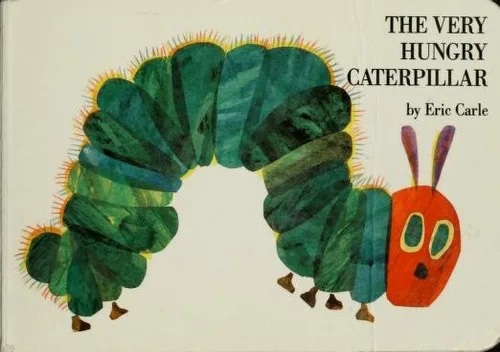
- Eric Carle's collage illustrations are among the most visually distinctive in children's literature — every page is a genuine piece of art
- Teaches counting, days of the week, food vocabulary, and metamorphosis without ever feeling like a lesson
The defining picture book of the 20th century — still perfect after 55 years
The Very Hungry Caterpillar has sold over 55 million copies because it is nearly perfect at what it does. The combination of Carle's collage art, the tactile die-cut format, and the gentle layering of concepts (counting, days, food, transformation) makes this the single book most pediatric reading specialists recommend starting with. It belongs in every home with a child under 7.
Read the full The Very Hungry Caterpillar review →Pros
- Eric Carle's collage illustrations are among the most visually distinctive in children's literature — every page is a genuine piece of art
- Teaches counting, days of the week, food vocabulary, and metamorphosis without ever feeling like a lesson
- The die-cut holes through the pages make it a physical, interactive object that toddlers and kindergarteners engage with differently than a flat picture book
Cons
- Text is extremely simple — works better as a read-aloud for kindergarten than as an independent reading challenge for 1st or 2nd grade
- So ubiquitous that some kids have it memorized before they can read — parents should treat it as a literacy foundation, not a standalone curriculum
Score Breakdown
Reading Level9.2Engagement9.6Illustrations9.9Literary Quality9.4Value9.7 - 3
9.3
~$6–$9Best Value
Best Value
~$6–$9at amazon
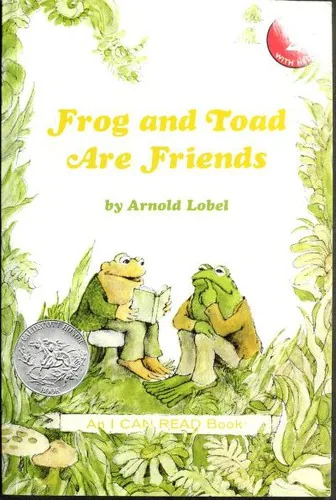
- An I Can Read Level 2 book — the ideal independent reading challenge for 1st and 2nd graders who are ready for something longer than picture books
- Stories about friendship, patience, and loyalty land emotionally for young children in ways they remember into adulthood
Five gentle stories about friendship that have made children cry since 1970
Frog and Toad Are Friends is one of the great American children's books and an ideal bridge from picture books to chapter books. The five short stories in each volume are long enough to feel like a real reading achievement for early readers, but short enough to finish in one sitting. The themes — waiting, kindness, small disappointments, friendship — are the themes of actual childhood.
Read the full Frog and Toad Are Friends review →Pros
- An I Can Read Level 2 book — the ideal independent reading challenge for 1st and 2nd graders who are ready for something longer than picture books
- Stories about friendship, patience, and loyalty land emotionally for young children in ways they remember into adulthood
- Four books in the series provide a natural progression — Frog and Toad Together, Frog and Toad All Year, Days with Frog and Toad
Cons
- Illustrations are charming but muted compared to the visual spectacle of modern picture books — some kids raised on iPad-level stimulation need a moment to settle in
- Slower pacing than Elephant & Piggie — better suited for 1st and 2nd grade than kindergarten
Score Breakdown
Reading Level9.6Engagement9.2Illustrations8.8Literary Quality9.7Value9.8 - 4
9.0
~$8–$12/bookBest for Reluctant Readers
Best for Reluctant Readers
~$8–$12/bookat amazon
- Repetitive, song-like text structure makes the reading pattern predictable — a huge confidence builder for kids who struggle to decode new words
- Pete's relentlessly positive attitude models emotional resilience in a way that feels cool rather than preachy
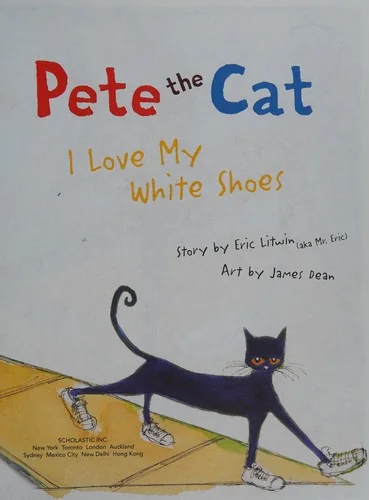
The cool, chill cat who turns reading into something kids actually want to do
Pete the Cat works because it makes reading feel effortless. The song-like repetition gives early readers a foothold on every page — they know what the pattern is, they can predict the next line, and that predictability builds real reading confidence. For kindergarteners and 1st graders who are still building their decoding skills, this series is one of the best tools available.
Read the full Pete the Cat Series review →Pros
- Repetitive, song-like text structure makes the reading pattern predictable — a huge confidence builder for kids who struggle to decode new words
- Pete's relentlessly positive attitude models emotional resilience in a way that feels cool rather than preachy
- Large, bold illustrations and bright colors hold attention across the full kindergarten–2nd grade range
Cons
- The repetitive structure that helps early readers can feel flat to stronger readers who are ready for narrative complexity
- Newer books in the extended series vary in quality — the original Eric Litwin titles are significantly stronger than later additions by other authors
Score Breakdown
Reading Level9.0Engagement9.5Illustrations9.1Literary Quality8.6Value9.2 - 5
9.1
~$8–$12/bookBest for 1st–2nd Grade
Best for 1st–2nd Grade
~$8–$12/bookat amazon
- Graphic novel format is genuinely accessible to early readers — the pictures carry significant narrative load so kids who struggle with dense text can follow along
- Humor is perfectly calibrated to the 6–9 year old sense of comedy — kids laugh out loud, which makes them want to keep reading
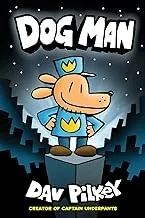
The graphic novel series that has turned more reluctant readers into book lovers than any other in the last decade
Dog Man has done more for 1st and 2nd grade boys' reading engagement than any curriculum or intervention in recent memory. The graphic novel format removes the visual monotony of dense text pages, the humor is exactly what 6–8 year olds find funny, and the characters are genuinely likable. Parents who worry about the silly content should weigh it against the fact that their kid is voluntarily reading for an hour.
Read the full Dog Man Series review →Pros
- Graphic novel format is genuinely accessible to early readers — the pictures carry significant narrative load so kids who struggle with dense text can follow along
- Humor is perfectly calibrated to the 6–9 year old sense of comedy — kids laugh out loud, which makes them want to keep reading
- 12+ books in the series means a child who gets hooked has years of reading material ahead
Cons
- Potty humor and silly violence concern some parents — it is mild by any objective measure, but worth knowing if that is a household priority
- Literary complexity is deliberately low — stronger readers will need to move to chapter books soon, but the series is an excellent on-ramp
Score Breakdown
Reading Level8.8Engagement9.9Illustrations9.3Literary Quality8.4Value9.0
Books for Early Readers Buying Guide
Why do these first books matter so much?
Kindergarten through second grade is where a child decides whether reading is a delight or a chore — and the books do the persuading. The right early books meet a new reader exactly where they are: simple enough to finish with pride, funny or warm enough to demand "again," and rich enough that a parent can stand the fortieth re-read. Kids who fall in love with a first book or series become kids who read for fun, and that habit predicts more than almost anything school measures.
What to look for
Decodable success, not frustration
Early readers should be able to conquer most of the page. Books with repetition, sight words, and picture support let a K–2 reader feel the "I read it MYSELF" win that builds the habit.
Genuinely funny or genuinely felt
Kids reread books that make them laugh or feel something. Humor is the most reliable gateway for this age — a book that lands a joke earns the next book.
Series momentum
When a child finishes a book and there are ten more just like it, the next read chooses itself. Series are the training wheels of reading stamina.
Illustrations that carry meaning
At this age, pictures aren’t decoration — they scaffold comprehension and expression reading. Look for art that tells the story alongside the words.
Read-aloud durability
You’ll read these together hundreds of times before they’re read solo. Choose books with voice, rhythm, and jokes at two levels — kid and parent.
Match the reader today
Reading levels vary enormously and normally across K–2. Buy for where your child actually is — a too-hard book teaches frustration, and there’s no prize for early chapter books.
Our shortlist of 5
- #1 Elephant & Piggie Series — Best Overall
- #2 The Very Hungry Caterpillar — Runner-Up
- #3 Frog and Toad Are Friends — Best Value
- #4 Pete the Cat Series — Best for Reluctant Readers
- #5 Dog Man Series — Best for 1st–2nd Grade
Frequently Asked Questions
How do I know if a book is the right level for my child?
Use the five-finger check: have your child read one page and put up a finger for each unknown word — zero to one is easy (great for confidence), two to three is the learning zone, five means save it for read-aloud. And keep easy books flowing: kids build fluency by devouring books below their frustration level, not by grinding at their ceiling.
Are graphic novels and joke-heavy series “real reading”?
Completely — comics-style books build vocabulary, inference, and story structure while keeping reluctant readers reading, and children’s literacy experts consistently endorse them. The path from a beloved graphic-novel series to prose chapter books is well-worn; the path from no reading to prose is not.
Should my child reread the same books over and over?
Yes — rereading is how early readers build fluency, and the comfort of a known book is exactly what makes reading feel safe and fun. Follow the rereads with gentle stretching: same series next book, same author new series, or "you read one page, I read one."
Our Ranking Methodology
Books evaluated on reading level appropriateness, child engagement and rereadability, illustration quality, literary and language quality, and value.
Learn more about how we test and score →