Best Books for Middle Schoolers (6th–8th Grade) of 2026
We ranked the best books for 6th through 8th grade on literary quality, emotional depth, age-appropriateness, thematic richness, and how well they hold the attention of 11–14 year olds — because middle school is when readers either deepen or disappear.
Filter Results
Filter Results
Showing 5 of 5 results
- 1
9.6
Best Overall~$9–$13Best Overall
Best Overall
~$9–$13at amazon
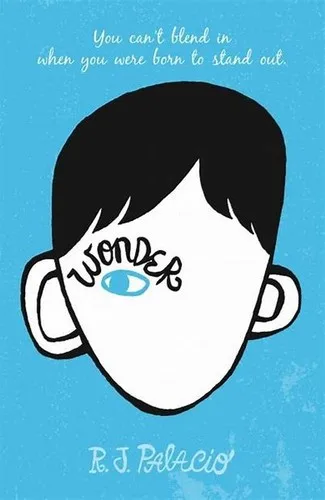
- Multi-perspective structure — the same events told by August, his sister, his friends — teaches empathy more effectively than any direct instruction
- Handles facial difference, bullying, and belonging with honesty that does not condescend to middle schoolers or sugarcoat the cruelty kids experience
The middle school novel that has changed how an entire generation treats kids who are different
Wonder is the most emotionally effective middle school novel of the last 20 years. R.J. Palacio's choice to tell the story from multiple perspectives — including the kids who bullied Auggie and the ones who didn't — creates a reading experience that genuinely expands a child's empathy. It belongs on every 6th and 7th grader's reading list, and the conversation it starts between parents and kids is worth more than the book itself.
Read the full Wonder review →Pros
- Multi-perspective structure — the same events told by August, his sister, his friends — teaches empathy more effectively than any direct instruction
- Handles facial difference, bullying, and belonging with honesty that does not condescend to middle schoolers or sugarcoat the cruelty kids experience
- Widely assigned in 6th grade classrooms nationwide, making it an ideal choice for summer reading before middle school
Cons
- Some of the bully characters feel underdeveloped — their cruelty is shown but their interiority is limited, which is a minor literary weakness
- The resolution is somewhat optimistic — which most readers prefer, but older students analyzing the book may find it less satisfying than the complexity of the setup
Score Breakdown
Literary Quality9.2Emotional Depth9.9Age Appropriateness9.8Themes9.7Engagement9.5 - 2
9.4
~$8–$12Runner-Up
Runner-Up
~$8–$12at amazon
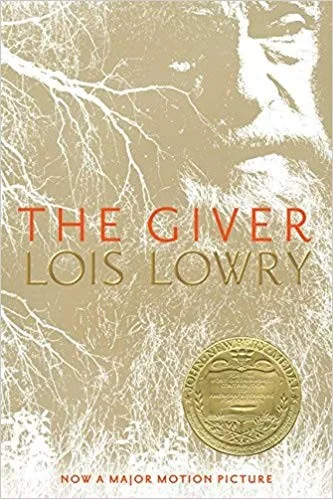
- Lowry's controlled, spare prose is itself a lesson in how language can create unease — the writing style mirrors the sanitized world Jonas inhabits
- Themes of conformity, freedom, memory, and the cost of painless existence are presented in a way that 7th and 8th graders can genuinely grapple with
The dystopian novel that teaches middle schoolers to question the world they inherit
The Giver is the gateway drug to dystopian fiction and philosophical thinking for middle schoolers. Lowry wrote a book that asks whether a society without pain, choice, or memory is worth living in — and she asks it in a way that 12 and 13 year olds can actually hold. The ending has been debated for 30 years. That is a feature, not a bug.
Read the full The Giver review →Pros
- Lowry's controlled, spare prose is itself a lesson in how language can create unease — the writing style mirrors the sanitized world Jonas inhabits
- Themes of conformity, freedom, memory, and the cost of painless existence are presented in a way that 7th and 8th graders can genuinely grapple with
- The ambiguous ending generates genuine discussion — rare for middle grade fiction, which usually resolves cleanly
Cons
- The euthanasia scene involving an infant is genuinely disturbing and requires parental conversation — it is handled with purpose but not softened
- Slower pacing in the first third can lose readers who are not yet invested in world-building
Score Breakdown
Literary Quality9.5Emotional Depth9.6Age Appropriateness9.2Themes9.8Engagement9.1 - 3
9.5
~$9–$14Best Value
Best Value
~$9–$14at amazon
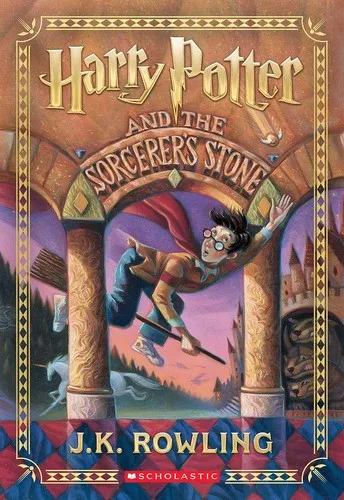
- World-building is extraordinary — Rowling created a secondary world complete enough that readers who finish all 7 books still discover new details on rereads
- The series grows in length and complexity with the reader — a child who starts at age 10 is reading a mature 800-page novel by the time they finish Deathly Hallows
The book that proved children would read 300-page fantasy novels if you got the world right
Harry Potter and the Sorcerer's Stone is the most successful English-language children's novel ever published for reasons that hold up under scrutiny: Rowling built a world with its own rules, history, and texture, then populated it with characters who feel real. Starting the series in 5th or 6th grade and finishing in 8th provides one of the best long-format reading experiences available for middle schoolers.
Read the full Harry Potter and the Sorcerer's Stone review →Pros
- World-building is extraordinary — Rowling created a secondary world complete enough that readers who finish all 7 books still discover new details on rereads
- The series grows in length and complexity with the reader — a child who starts at age 10 is reading a mature 800-page novel by the time they finish Deathly Hallows
- Themes of chosen family, loyalty, institutional corruption, and the ordinary heroism of kindness are deeply embedded in an entertaining adventure structure
Cons
- Author controversy has complicated the cultural conversation around the series — parents should be prepared for those conversations with older middle schoolers
- First book is the gentlest in the series — some 7th and 8th graders who start here may find it younger-skewing than they expected
Score Breakdown
Literary Quality9.1Emotional Depth9.0Age Appropriateness9.7Themes9.2Engagement9.9 - 4
9.2
~$8–$11Best for 8th Grade
Best for 8th Grade
~$8–$11at amazon
- Hinton wrote this at 16, and that authorial age is felt on every page — the emotional authenticity of adolescent loyalty and grief is unlike anything written by an adult author
- Class conflict, brotherhood, and the randomness of violence are handled with the seriousness they deserve rather than softened for a young audience
Written by a 16-year-old — and still the most authentic portrait of adolescent loyalty and loss in American fiction
The Outsiders has been assigned in 8th grade English classrooms for 60 years because it is the most honest book about being a teenager ever written — and it was written by one. Ponyboy Curtis's story of loyalty, class, violence, and loss hits differently than anything written by an adult looking back. It is the right book at the right time for 13 and 14 year olds who are starting to understand that the world is not fair.
Read the full The Outsiders review →Pros
- Hinton wrote this at 16, and that authorial age is felt on every page — the emotional authenticity of adolescent loyalty and grief is unlike anything written by an adult author
- Class conflict, brotherhood, and the randomness of violence are handled with the seriousness they deserve rather than softened for a young audience
- Short enough (180 pages) to finish in a weekend while substantive enough for serious classroom discussion
Cons
- Gang violence, death, and mature themes make this more appropriate for 7th–8th grade than 6th — parents of younger middle schoolers should read it first
- The 1960s Tulsa setting requires some historical context for modern readers who may not connect immediately
Score Breakdown
Literary Quality9.0Emotional Depth9.7Age Appropriateness8.8Themes9.5Engagement9.3 - 5
9.0
~$7–$11Best for Sci-Fi and Fantasy Readers
Best for Sci-Fi and Fantasy Readers
~$7–$11at amazon
- L'Engle weaves actual physics concepts (tesseracts, the fifth dimension) into an adventure story in a way that makes science feel like magic
- Meg Murry is one of the few female protagonists in mid-century children's fiction who is allowed to be angry, flawed, and heroic without being softened
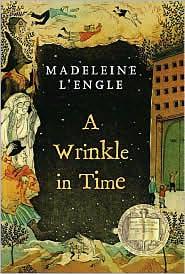
The novel that introduced generations of middle schoolers to physics, metaphysics, and the idea that love is a weapon against evil
A Wrinkle in Time was rejected by 26 publishers before it became a Newbery Medal winner and one of the most influential children's novels of the 20th century. L'Engle wrote a book about a girl who saves the universe through stubbornness and love — and managed to embed real physics, genuine philosophical inquiry, and spiritual depth in an adventure story. It rewards careful reading and is perfect for 6th and 7th graders who are ready to think.
Read the full A Wrinkle in Time review →Pros
- L'Engle weaves actual physics concepts (tesseracts, the fifth dimension) into an adventure story in a way that makes science feel like magic
- Meg Murry is one of the few female protagonists in mid-century children's fiction who is allowed to be angry, flawed, and heroic without being softened
- Philosophical and spiritual themes are present but not dogmatic — the book raises questions without dictating answers, which is rare and valuable
Cons
- Pacing is uneven — the opening chapters demand patience from readers who are not immediately drawn to Meg's character before the adventure begins
- Abstract metaphysical concepts in the final act can lose readers who want concrete plot payoff rather than allegorical resolution
Score Breakdown
Literary Quality9.3Emotional Depth9.0Age Appropriateness9.1Themes9.6Engagement8.7
Books for Middle School Buying Guide
Why do middle school books carry extra weight?
Middle schoolers are building an identity, and books are safe rehearsal space — a place to feel big feelings, test moral questions, and discover they’re not the only one. It’s also the age reading most often dies, crowded out by phones and self-consciousness. The books that survive this gauntlet are the ones that respect a 12-year-old’s intelligence: real emotional depth, questions without tidy answers, and characters who feel like them. One right book at 12 can keep a reader for life.
What to look for
Emotional honesty
Middle schoolers detect condescension instantly. The books that land treat friendship, cruelty, grief, and belonging as seriously as kids experience them.
Questions, not lessons
The classics of this age — dystopias, moral dilemmas, outsider stories — work because they ask what the reader would do instead of telling them what to think. That’s catnip to a developing conscience.
Age-appropriateness with room to feel
Content should fit 11–14 — intense feelings, yes; graphic content, no. Read reviews or skim anything you’re unsure about; the right edge is different for every kid.
Identity mirrors and windows
Kids need some books that mirror their own experience and some that open windows onto others’. A shelf with both builds both confidence and empathy.
Phone-competitive openings
A middle school book gets about ten pages to beat the phone. Strong hooks, short chapters, and voice-driven narration win the attention war.
Book-club potential
Books an adult can honestly enjoy too — and many at this level are that good — turn into conversations. "I read it too" is the best comprehension strategy ever invented.
Our shortlist of 5
- #1 Wonder — Best Overall
- #2 The Giver — Runner-Up
- #3 Harry Potter and the Sorcerer's Stone — Best Value
- #4 The Outsiders — Best for 8th Grade
- #5 A Wrinkle in Time — Best for Sci-Fi and Fantasy Readers
Frequently Asked Questions
How do I keep my middle schooler reading when the phone always wins?
Lower the friction and raise the stakes: books visible everywhere, e-reader or library app on the phone itself, series with sequels ready, and — most powerful — read the same book they’re reading and talk about it like it matters. Protecting a screen-free reading window (bedtime is the classic) does more than any single title.
Are dystopian and dark themes okay for this age?
Generally yes — dystopias and morally serious stories are beloved at this age precisely because 11–14-year-olds are building their own moral machinery, and fiction is the safest place to stress-test it. Know your own kid’s sensitivity, skim anything you’re unsure of, and be available for the conversations good dark books start.
Should I let my middle schooler read above their age level?
Reading level, yes — many middle schoolers can decode adult prose. Content is the real question: match the emotional maturity of the book to your kid, not the vocabulary. A quick skim or a look at content reviews answers most doubts, and "read it together" resolves the rest.
Our Ranking Methodology
Books evaluated on literary quality, emotional depth and resonance, age-appropriateness, thematic complexity, and engagement.
Learn more about how we test and score →