
Best Convertible Car Seats
Convertible car seats grow with your child from rear-facing infant through forward-facing toddler and beyond. We evaluated installation ease, safety ratings, comfort, and long-term value to find the top picks for families.
Filter Results
Filter Results
Showing 5 of 5 results
- 1
9.4
Best Overall$400Best Overall
Best Overall
$400at amazon
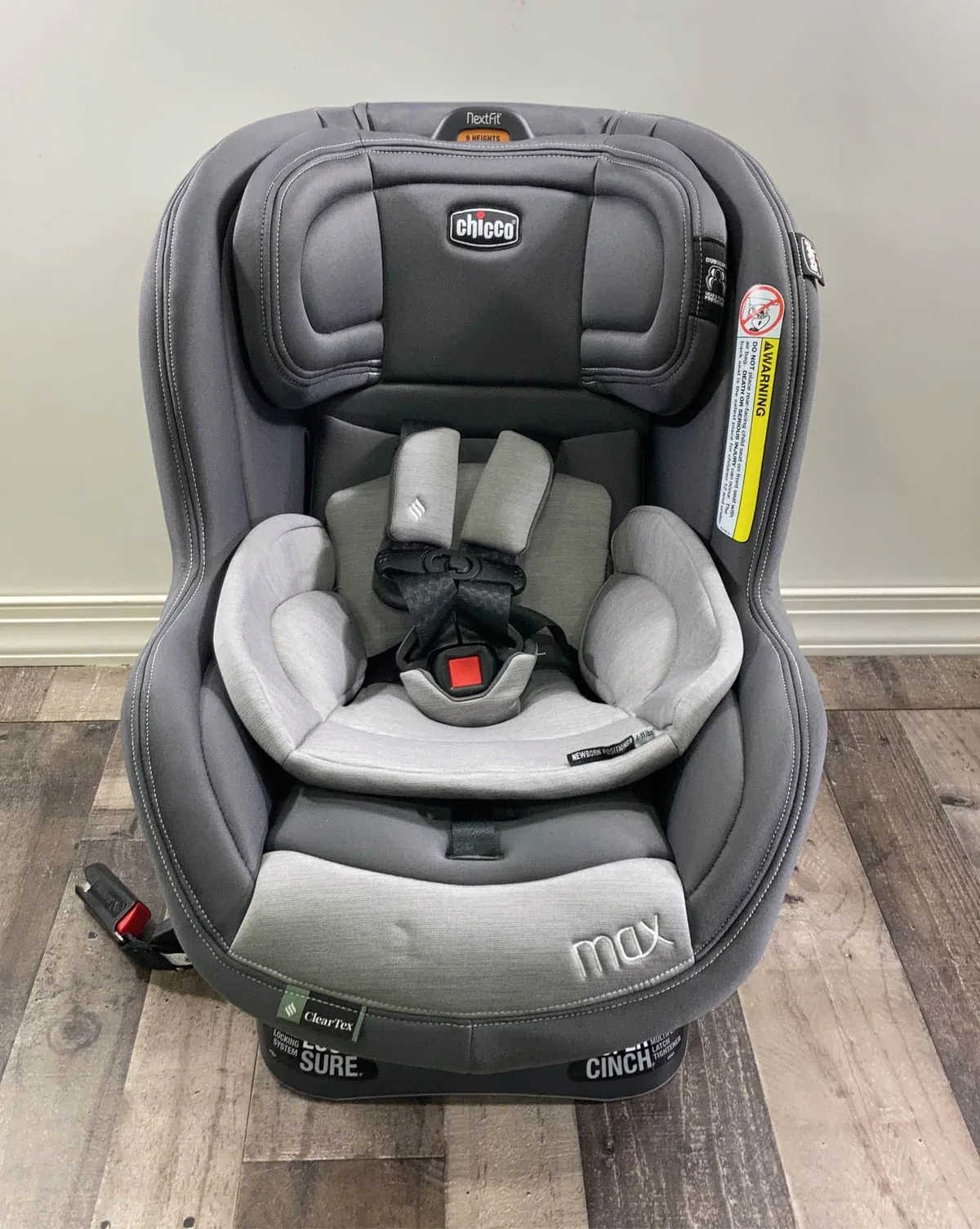
- SuperCinch LATCH tightener makes rock-solid installation fast and intuitive
- ReclineSure leveling system with 9 positions takes guesswork out of angle adjustment
Premium safety and unbeatable installation confidence
The Chicco NextFit Max ClearTex earns its top spot with the most intuitive LATCH installation system we tested — the SuperCinch tightener snaps the seat firm in seconds. Combined with a generous 9-position recline, PFAS-free fabric, and a 40 lb rear-facing limit, it delivers premium safety and peace of mind for families willing to invest in a flagship seat.
Read the full NextFit Max ClearTex review →Pros
- SuperCinch LATCH tightener makes rock-solid installation fast and intuitive
- ReclineSure leveling system with 9 positions takes guesswork out of angle adjustment
- ClearTex fabric is free of PFAS, flame retardants, and other harmful chemicals
Cons
- At $400 it is one of the pricier convertible seats on the market
- Bulky footprint can be tight in smaller rear seats or three-across configurations
Score Breakdown
Safety Ratings9.7Ease Of Install9.5Comfort9.2Longevity9.0Value8.8 - 2
9.1
$500Runner-Up
Runner-Up
$500at amazon
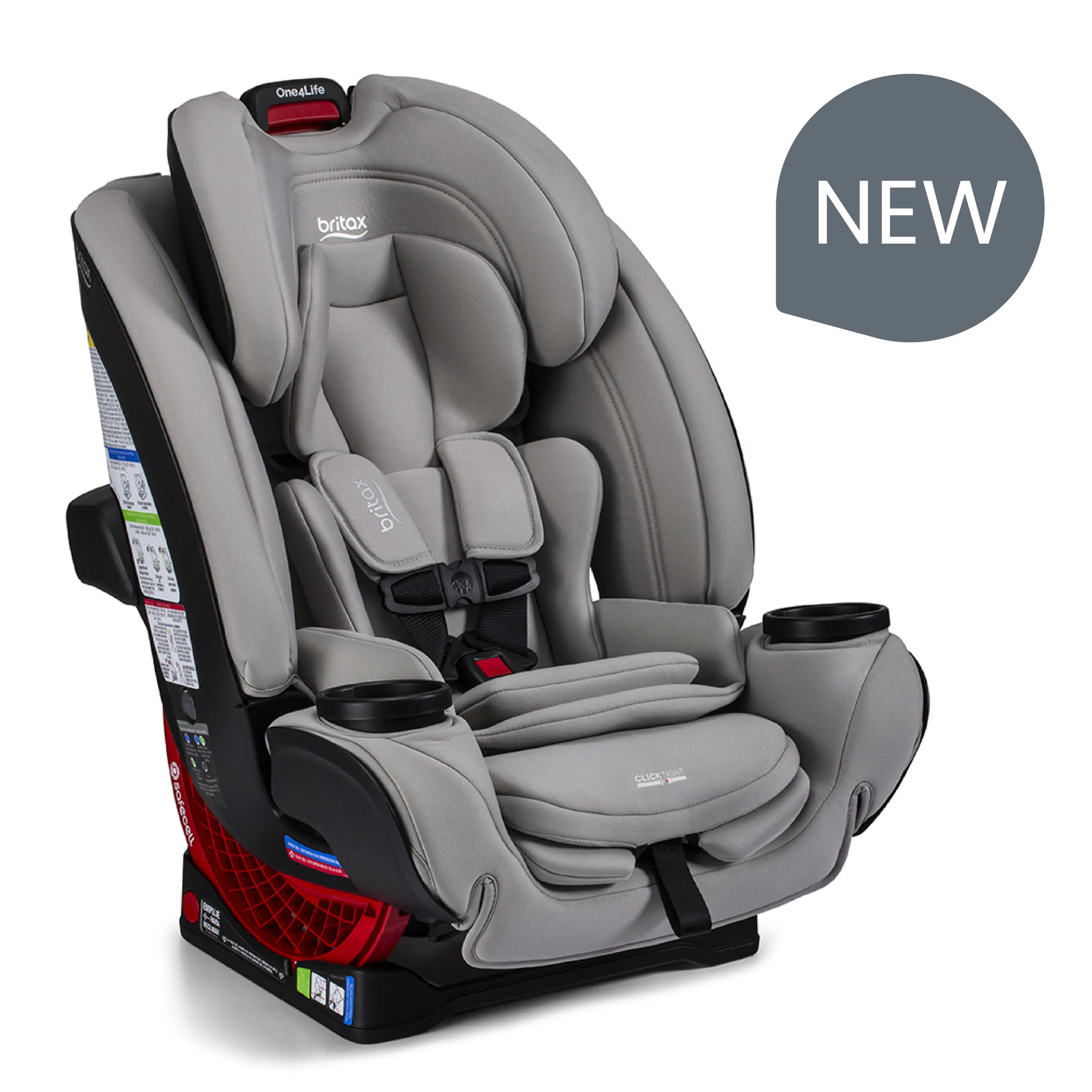
- ClickTight installation is foolproof — open the buckle, thread the belt, close it, done
- Converts from rear-facing infant through booster to 120 lb, covering newborn to ~10 years
The last car seat you will ever need to buy
The Britax One4Life is truly a birth-to-booster seat, eliminating the need to purchase multiple seats as your child grows. Britax's ClickTight belt-path system is the gold standard for seatbelt installation, and the SafeCell steel frame provides exceptional side-impact protection. At $500 it is a splurge, but the math works out if you skip buying separate infant and booster seats.
Read the full One4Life ClickTight All-in-One review →Pros
- ClickTight installation is foolproof — open the buckle, thread the belt, close it, done
- Converts from rear-facing infant through booster to 120 lb, covering newborn to ~10 years
- SafeCell impact protection system with steel frame and energy-absorbing base
Cons
- $500 price tag is the highest on this list and a significant investment
- Seat is quite heavy at 32 lb, making it cumbersome to move between vehicles
Score Breakdown
Safety Ratings9.6Ease Of Install9.3Comfort9.0Longevity9.8Value8.4 - 3
8.7
$200Best Value
Best Value
$200at amazon
- 4-position extension panel adds 5 inches of legroom, extending rear-facing to 50 lb
- InRight LATCH system clicks in with one hand for confident installation
Exceptional rear-facing extension at an approachable price
The Graco Extend2Fit punches well above its $200 price point with a 50 lb rear-facing limit and a sliding extension panel that keeps taller toddlers comfortably rear-facing longer. NHTSA ratings are solid and the InRight LATCH system is genuinely easy to use. Families who want strong safety credentials without a flagship price will find this their best pick.
Read the full Extend2Fit 3-in-1 review →Pros
- 4-position extension panel adds 5 inches of legroom, extending rear-facing to 50 lb
- InRight LATCH system clicks in with one hand for confident installation
- At roughly $200, it delivers outstanding safety for the price
Cons
- Padding is noticeably thinner than premium seats and may need a separate insert for newborns
- Recline adjustment requires more steps than competitors like Chicco or Britax
Score Breakdown
Safety Ratings9.0Ease Of Install8.5Comfort8.4Longevity8.8Value9.6Safety Rating9.0 - 4
8.5
$350The narrow-profile choice for three-across seating
The narrow-profile choice for three-across seating
$350at amazon
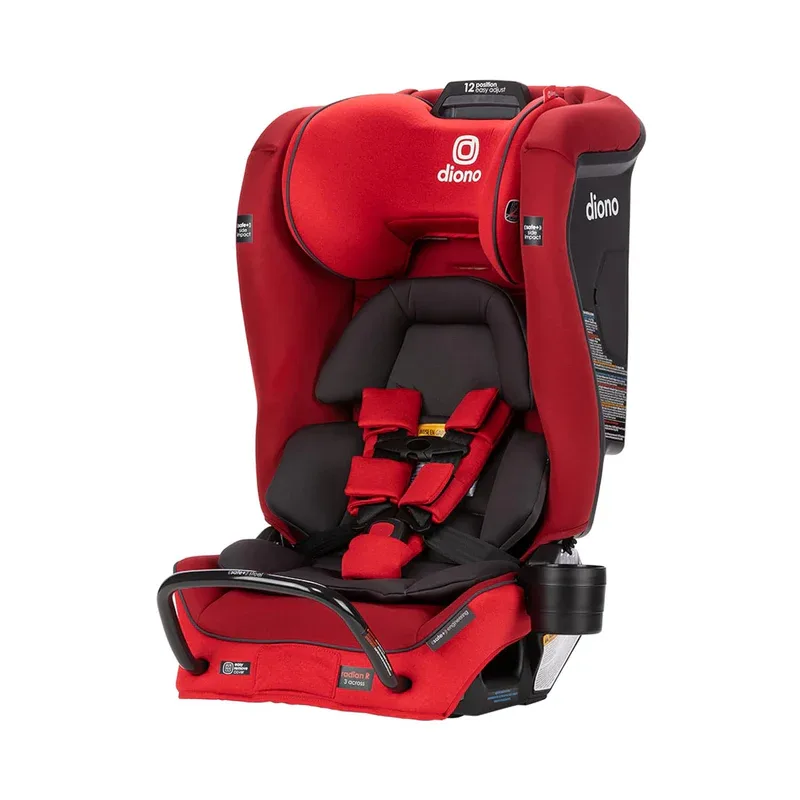
- 17-inch width is the narrowest steel-frame convertible available, ideal for three-across installs
- Aircraft-grade aluminum reinforced frame and 3 layers of side-impact protection
The narrow-profile choice for three-across seating
The Diono Radian 3RXT is the go-to solution for families who need to fit three car seats across a single row. Its 17-inch footprint and reinforced steel frame are unmatched in the category, and the fold-flat design is a genuine travel convenience. Installation takes more effort to master, but once you dial it in the seat is rock solid.
Read the full Radian 3RXT SafePlus review →Pros
- 17-inch width is the narrowest steel-frame convertible available, ideal for three-across installs
- Aircraft-grade aluminum reinforced frame and 3 layers of side-impact protection
- Folds flat for storage and travel, a rare feature in convertible seats
Cons
- Installation is more involved than competitors — tether and LATCH anchoring requires patience
- Narrower seat width can feel snug for broader-shouldered toddlers
Score Breakdown
Safety Ratings9.1Ease Of Install7.8Comfort8.3Longevity9.2Value8.2 - 5
8.1
$230Budget-friendly all-in-one with a strong safety record
Budget-friendly all-in-one with a strong safety record
$230at amazon
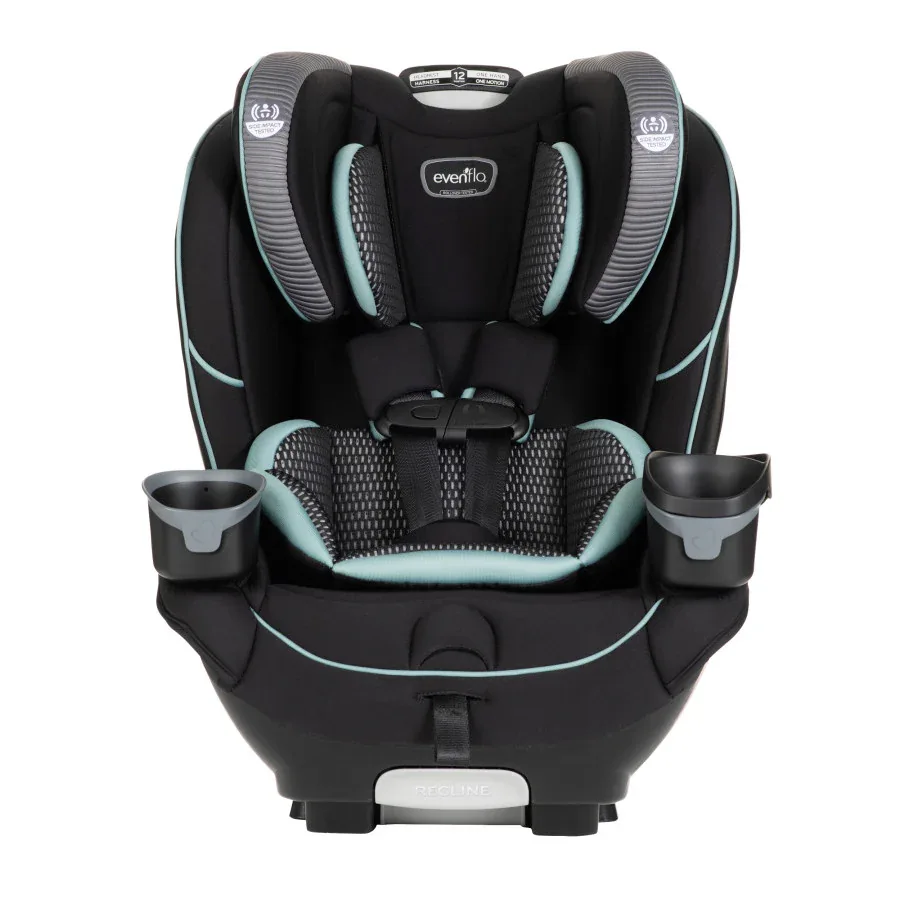
- Converts rear-facing, forward-facing, high-back booster, and backless booster up to 120 lb
- e3 Side Impact Protection tested in multiple crash directions beyond federal requirements
Budget-friendly all-in-one with a strong safety record
The Evenflo EveryFit 4-in-1 offers a credible birth-to-booster progression at a price that undercuts most of the competition. Evenflo's proprietary e3 Side Impact testing goes beyond federal standards, and the 120 lb weight limit means this seat can legitimately last through elementary school. It gives up some comfort and fit-and-finish refinement to hit that price, but the safety fundamentals are sound.
Read the full EveryFit 4-in-1 review →Pros
- Converts rear-facing, forward-facing, high-back booster, and backless booster up to 120 lb
- e3 Side Impact Protection tested in multiple crash directions beyond federal requirements
- Competitive $230 price for a true birth-to-booster solution
Cons
- Fabric and padding quality feel noticeably lower than Graco or Chicco at similar price points
- Cup holder and canopy sold separately, adding cost to the base price
Score Breakdown
Safety Ratings8.8Ease Of Install8.2Comfort7.9Longevity9.0Value9.3
Car Seats Buying Guide
Why choose a convertible car seat?
A convertible seat starts rear-facing for babies and toddlers, then converts to forward-facing as your child grows — one purchase that can last from the first year until your child is ready for a booster. Because they support rear-facing to higher height and weight limits than infant carriers, convertibles also make it easy to follow the safest practice: keeping kids rear-facing as long as the seat allows.
What to look for
Rear-facing limits
Higher rear-facing height and weight limits let your child stay in the safest orientation longer. The American Academy of Pediatrics recommends rear-facing until a child outgrows the seat’s rear-facing limits — not just until age two.
Ease of installation
A seat that installs correctly every time beats a feature-rich seat that doesn’t. Look for clear level indicators, easy-to-tension LATCH connectors, and a manual you can actually follow.
Fit in your vehicle
Measure before you buy. Bulky seats can be impractical rear-facing in smaller cars, especially with a tall driver.
Harness adjustment
A no-rethread harness that adjusts height without uninstalling the seat saves real frustration as your child grows.
Cleanability
Kids live in these seats. Machine-washable, easy-off covers matter more than you think.
Expiration and lifespan
Car seats expire — typically 6 to 10 years from manufacture. Check the date label, especially for secondhand seats, and never use a seat that has been in a crash.
Our shortlist of 5
- #1 NextFit Max ClearTex — Best Overall
- #2 One4Life ClickTight All-in-One — Runner-Up
- #3 Extend2Fit 3-in-1 — Best Value
- #4 Radian 3RXT SafePlus
- #5 EveryFit 4-in-1
Frequently Asked Questions
When should I switch from an infant seat to a convertible?
When your baby outgrows the infant carrier’s height or weight limit — often around 9 to 18 months — or earlier if you’d rather skip the carrier entirely; convertibles are safe from birth as long as the seat fits your newborn’s size.
How long should my child stay rear-facing?
As long as the seat allows. Rear-facing is significantly safer in a crash, and modern convertibles support it to 40–50 lbs, which covers most kids well past their fourth birthday.
Do car seats really expire?
Yes. Plastics fatigue, standards evolve, and crash history is unknowable on old seats. Check the expiration label — typically 6 to 10 years from the manufacture date — and replace any seat involved in a moderate or severe crash.
Our Ranking Methodology
Convertible car seats were evaluated on crash-test safety ratings, ease of correct installation, child comfort, longevity across rear- and forward-facing use, and overall value.
Learn more about how we test and score →