
Best Cribs & Bassinets
Safe, comfortable sleep is the top priority for newborn families. We evaluated bassinets and convertible cribs on safety certifications, build quality, ease of assembly, and how well they actually help babies sleep.
Filter Results
Filter Results
Showing 5 of 5 results
- 1
9.5
Best Overall$1,695Best Overall
Best Overall
$1,695at direct
- Responsive sound and gentle motion automatically escalate to soothe fussing without lifting baby
- Tethered sleep sack keeps baby safely on their back — the only bassinet with FDA Breakthrough Device designation for reducing sleep-related risks
Responsive soothing that adds hours of sleep for new parents
The SNOO is in a category of its own: an FDA-recognized smart bassinet that responds to infant cries with escalating white noise and gentle rocking, helping babies and parents sleep significantly more. Independent research published in the Journal of Clinical Sleep Medicine supports its effectiveness. The price is steep, but Happiest Baby's rental program makes it accessible, and resale value remains strong.
Read the full SNOO Smart Sleeper Bassinet review →Pros
- Responsive sound and gentle motion automatically escalate to soothe fussing without lifting baby
- Tethered sleep sack keeps baby safely on their back — the only bassinet with FDA Breakthrough Device designation for reducing sleep-related risks
- Companion app logs sleep data and lets you control settings remotely
Cons
- At $1,695 it is by far the most expensive option — rentals at ~$159/month make it more accessible
- Only usable until baby can push up on hands and knees, typically 5–6 months
Score Breakdown
Safety9.8Build Quality9.6Ease Of Assembly9.0Sleep Quality9.7Value7.8 - 2
9.0
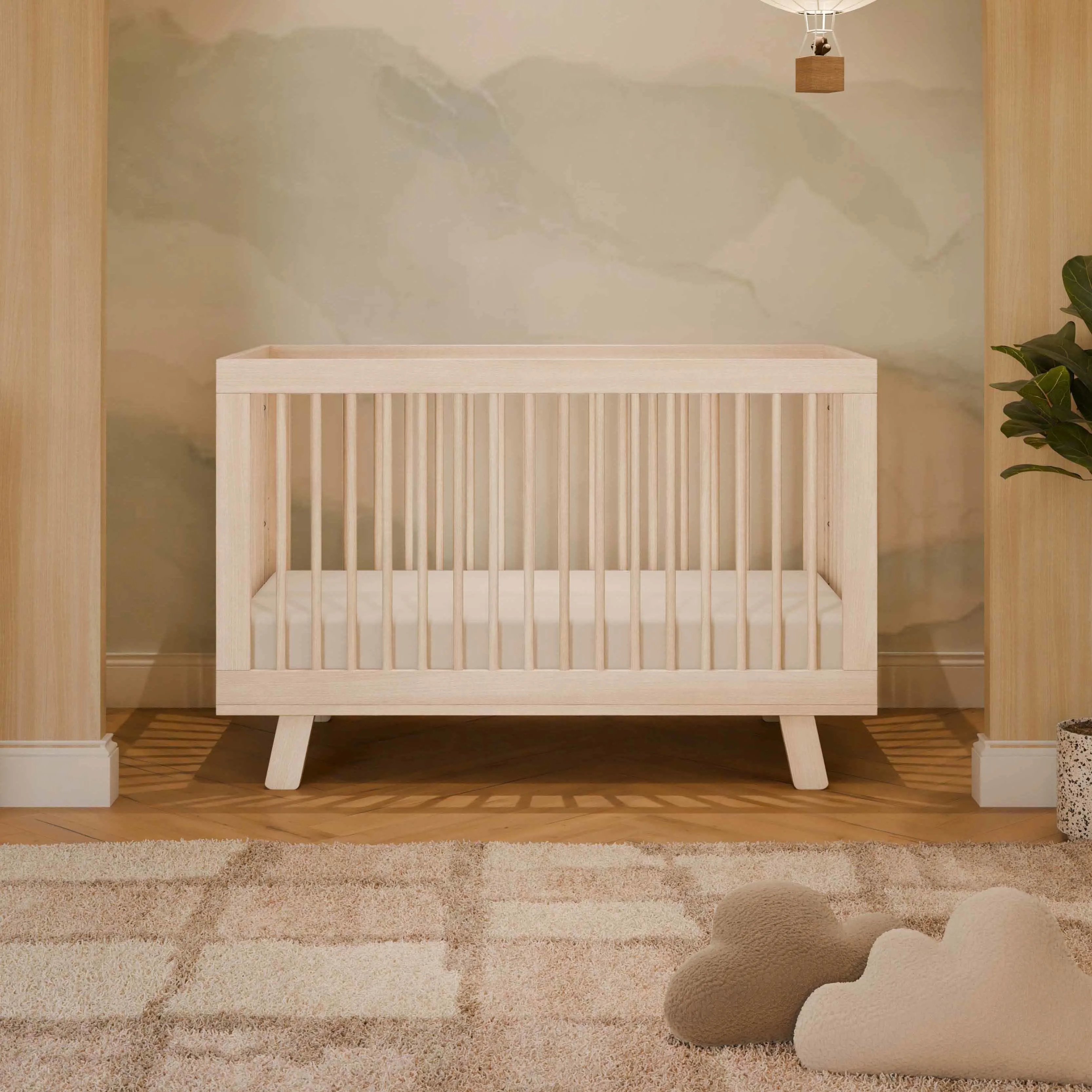
$500Runner-Up
Runner-Up
$500at direct
- GREENGUARD Gold certified for low chemical emissions — among the strictest certifications for nursery furniture
- Clean mid-century spindle design is a perennial favorite and coordinates with most nursery styles
Mid-century modern design that converts to toddler bed and daybed
The Babyletto Hudson consistently tops nursery furniture lists for good reason: it pairs genuine GREENGUARD Gold safety credentials with a timeless design that ages gracefully from newborn through toddlerhood. The three-position mattress height, smooth drawer-free finish, and solid build quality justify the $500 price for families who want a crib that looks as good as it performs.
Read the full Hudson 3-in-1 Convertible Crib review →Pros
- GREENGUARD Gold certified for low chemical emissions — among the strictest certifications for nursery furniture
- Clean mid-century spindle design is a perennial favorite and coordinates with most nursery styles
- Converts to toddler bed and daybed, extending usable life well into preschool years
Cons
- Toddler rail conversion kit is sold separately, adding to the sticker price
- Assembly requires careful alignment of slats and can take 45–60 minutes for one person
Score Breakdown
Safety9.4Build Quality9.2Ease Of Assembly8.7Sleep Quality8.8Value8.9 - 3
8.6
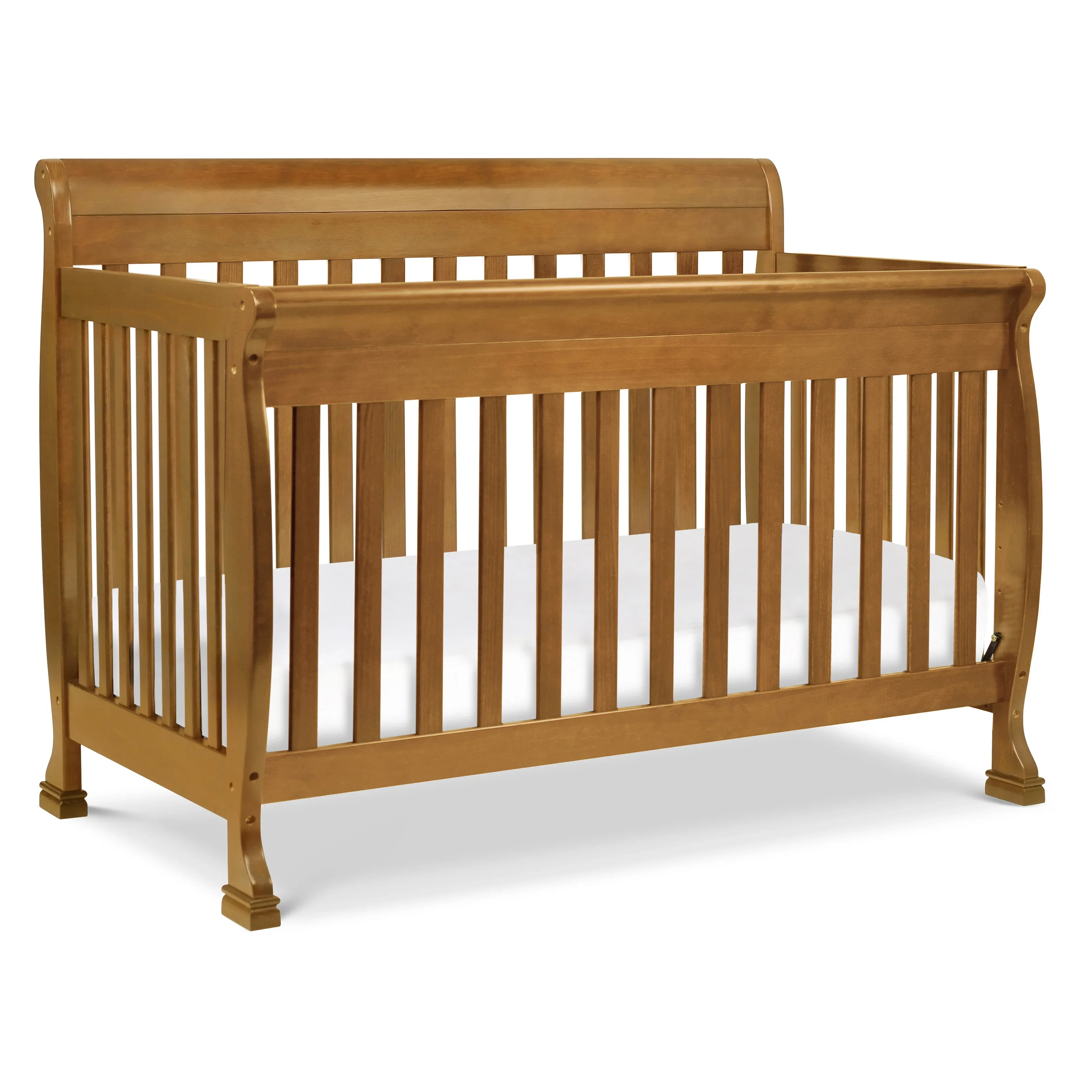
$280Best Value
Best Value
$280at direct
- GREENGUARD Gold certified at a price that beats most non-certified competitors
- Converts to toddler bed, daybed, and full-size bed with included conversion kit
GREENGUARD Gold quality at an entry-level price
The DaVinci Kalani is the rare crib that carries GREENGUARD Gold certification without the premium price tag. Its four-stage conversion — crib to toddler bed to daybed to full-size — means the frame can theoretically follow a child into young adulthood. For budget-conscious families who refuse to compromise on chemical safety, the Kalani is the clear value leader.
Read the full Kalani 4-in-1 Convertible Crib review →Pros
- GREENGUARD Gold certified at a price that beats most non-certified competitors
- Converts to toddler bed, daybed, and full-size bed with included conversion kit
- New Zealand pine construction is sturdy and holds up to years of active toddler use
Cons
- Design is traditional rather than modern — fewer style options than Babyletto
- Full-size conversion requires a separately purchased bed frame
Score Breakdown
Safety9.3Build Quality8.5Ease Of Assembly8.8Sleep Quality8.4Value9.5 - 4
8.0
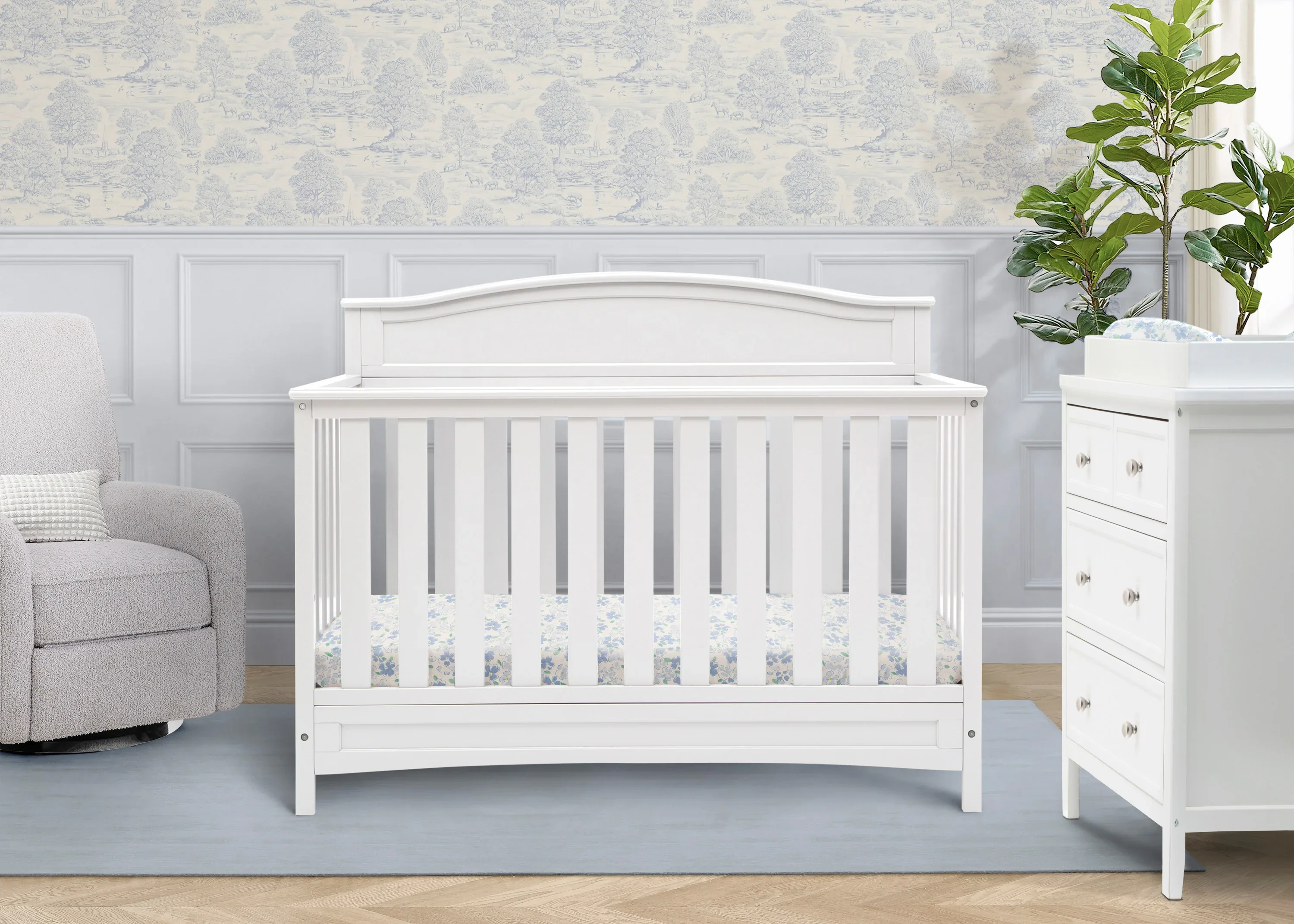
$200Solid, safe, and affordable for first-time parents
Solid, safe, and affordable for first-time parents
$200at amazon
- JPMA certified and ASTM/CPSC compliant with non-toxic, lead-free finish
- Straightforward two-person assembly typically completed in under 30 minutes
Solid, safe, and affordable for first-time parents
Delta Children's Emery 4-in-1 is the most accessible crib on our list and a sensible choice for parents working with a tight nursery budget. Safety certifications are solid, assembly is quick, and the four-stage conversion offers long-term flexibility. Expect to invest in conversion kits over time, and know that the build quality reflects the $200 price point — but the fundamentals are sound.
Read the full Emery 4-in-1 Convertible Crib review →Pros
- JPMA certified and ASTM/CPSC compliant with non-toxic, lead-free finish
- Straightforward two-person assembly typically completed in under 30 minutes
- Four-stage conversion covers crib through full-size bed at the lowest price on this list
Cons
- Engineered wood construction feels lighter and less substantial than solid-wood competitors
- Four conversion kits all sold separately, adding meaningful cost over time
Score Breakdown
Safety8.8Build Quality7.9Ease Of Assembly8.6Sleep Quality7.8Value9.4 - 5
8.2
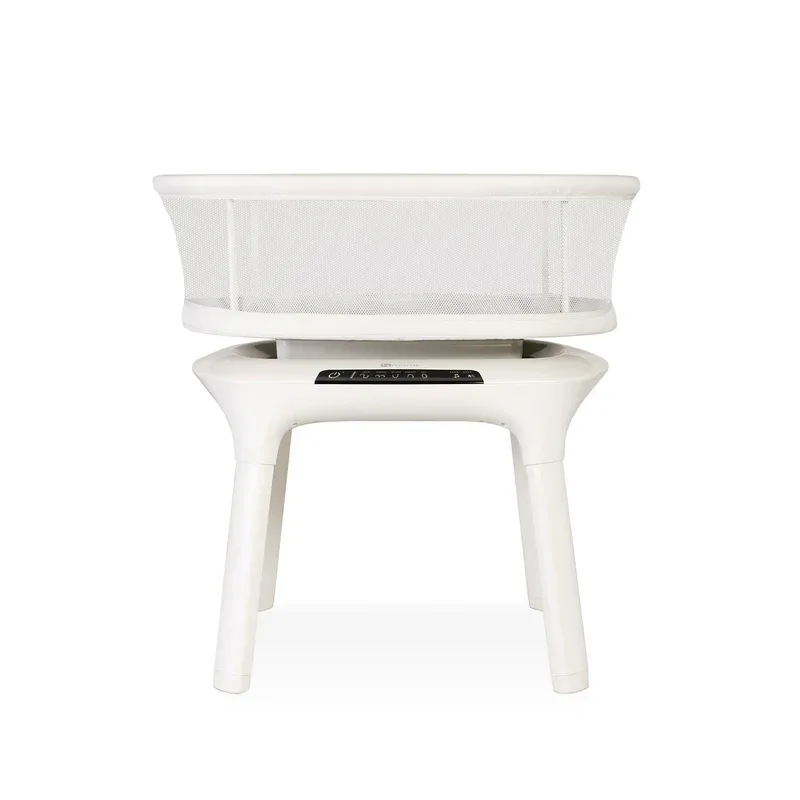
$350Five unique motions that mimic how parents naturally soothe
Five unique motions that mimic how parents naturally soothe
$350at direct
- Five unique motion patterns (car ride, tree swing, rock-a-bye, wave, kangaroo) go beyond simple side-to-side rocking
- Bluetooth app control lets you adjust speed and sound without entering the nursery
Five unique motions that mimic how parents naturally soothe
The 4moms mamaRoo Sleep Bassinet brings the beloved mamaRoo motion technology into a dedicated sleep product, offering five distinct motions and built-in white noise that parents can control silently from their phone. It strikes a reasonable middle ground between a basic bedside bassinet and the SNOO — more soothing capability than a static sleeper, at about a fifth of the SNOO's price.
Read the full mamaRoo Sleep Bassinet review →Pros
- Five unique motion patterns (car ride, tree swing, rock-a-bye, wave, kangaroo) go beyond simple side-to-side rocking
- Bluetooth app control lets you adjust speed and sound without entering the nursery
- Compact footprint fits beside a bed more easily than most bassinets
Cons
- Motion range and intensity are more limited than the SNOO's responsive system
- Maximum weight limit of 25 lb means most babies outgrow it by 4–5 months
Score Breakdown
Safety9.0Build Quality8.4Ease Of Assembly9.1Sleep Quality8.3Value8.0

Sleep Buying Guide
Why does the crib decision matter?
Your baby will spend more hours in their sleep space than anywhere else in the house — and it’s the one place they’re regularly alone, which is why safety standards matter more here than for any other purchase. A well-chosen crib or bassinet gives you a safe, boringly reliable sleep surface for years; a convertible model can carry a child from newborn nights to a big-kid bed. This is the purchase where you buy once, buy certified, and never improvise.
What to look for
Current safety certification
Every new crib sold in the U.S. must meet federal CPSC standards — buying new (or checking a used crib against current rules) is the simplest way to be sure. Skip drop-side cribs entirely; they were banned in 2011.
A firm, flat, bare surface
The American Academy of Pediatrics recommends a firm, flat mattress with a fitted sheet and nothing else — no bumpers, pillows, blankets, or positioners. Any crib that encourages soft add-ons is working against safe-sleep guidance.
Bassinet months vs. crib years
A bassinet buys convenient bedside proximity for roughly the first 4–6 months; the crib covers years. If budget forces a choice, a crib from day one works fine — the bassinet is a convenience, not a requirement.
Convertibility you’ll actually use
3-in-1 and 4-in-1 cribs become toddler beds and daybeds — but conversion kits are often sold separately. Price the kit now; it’s cheaper than discovering it’s discontinued in three years.
Mattress height settings
Multiple mattress positions let you start high (easy on your back with a newborn) and drop low before your baby can pull to standing. Three or more settings is the practical minimum.
Low-emission materials
GREENGUARD Gold certification means the crib was tested for low chemical emissions — worth looking for in the room where your baby breathes all night.
Bassinet, smart bassinet, or straight to the crib?
All three are safe choices if the product meets current standards — this is a lifestyle decision, not a safety one. A bedside bassinet makes the AAP-recommended practice of room-sharing for at least the first six months much easier, especially while you’re feeding at night. Smart bassinets add motion and soothing that some families swear by and others find unnecessary at the price; they’re rentable in many cities, which is a sensible way to find out which family you are. Going straight to a full crib in your room (if space allows) or in the nursery costs the least overall — you were going to buy the crib anyway. Rule of thumb: optimize the first six months for your sleep and recovery, then let the crib do the long haul.
Our shortlist of 5
- #1 SNOO Smart Sleeper Bassinet — Best Overall
- #2 Hudson 3-in-1 Convertible Crib — Runner-Up
- #3 Kalani 4-in-1 Convertible Crib — Best Value
- #4 Emery 4-in-1 Convertible Crib
- #5 mamaRoo Sleep Bassinet
Frequently Asked Questions
What does my baby actually need in the crib?
A firm, flat mattress that fits snugly, a fitted sheet, and nothing else. The American Academy of Pediatrics recommends a completely bare sleep surface — no bumpers, blankets, pillows, or stuffed animals — for the whole first year.
Is a used or hand-me-down crib safe?
Only if it meets current standards: manufactured after the 2011 federal rules took effect, no drop sides, slats no more than 2 3/8 inches apart, all original hardware, and no recalls (check CPSC.gov). If you can’t verify all of that, buy new — entry-level new cribs meet the exact same safety standards as premium ones.
When should we move from bassinet to crib?
When your baby hits the bassinet’s weight limit, starts rolling or pushing up, or simply outgrows it — usually around 4–6 months. Whichever comes first wins; bassinet limits are firm safety cutoffs, not suggestions.
Our Ranking Methodology
Cribs and bassinets were evaluated on compliance with current federal safety standards and certifications, build quality and materials, ease of assembly, how well the design supports safe and restful sleep, and overall value across the years of use.
Learn more about how we test and score →