
Best Toddler Toys of 2026
We evaluated the top toddler toys on developmental value, how long kids stay engaged with them, safety and durability, and whether the price is actually worth it — because toddlers are brutal on both toys and budgets.
Filter Results
Filter Results
Showing 5 of 5 results
- 1
9.6
Best Overall$34.99Best Overall
Best Overall
$34.99at Amazon Associates
- Completely open-ended — kids build the same set a thousand different ways across years of play
- Virtually indestructible — DUPLO bricks survive multiple children and still look new
The definitive open-ended building toy for toddlers 1.5–5
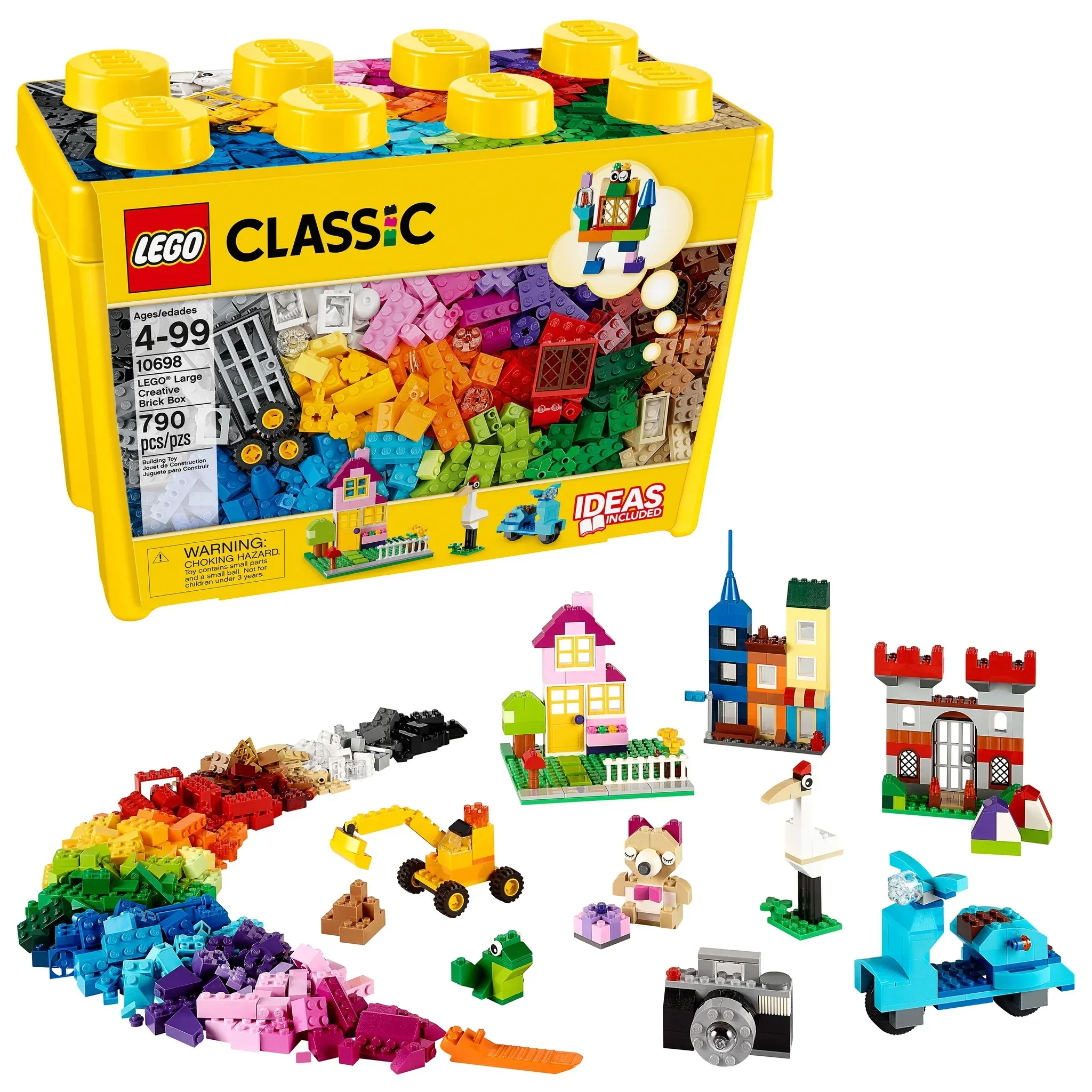
DUPLO is the gold standard of toddler toys for a reason. The bricks are perfectly sized for chubby toddler fingers, nearly impossible to break, and stimulate spatial reasoning and creativity with zero screen time. Sets you buy at age 2 are still being played with at age 5 — and then passed on to the next kid without a scratch.
Read the full LEGO DUPLO Classic Brick Box review →Pros
- Completely open-ended — kids build the same set a thousand different ways across years of play
- Virtually indestructible — DUPLO bricks survive multiple children and still look new
- Intercompatible with all DUPLO sets, so the collection grows without waste
Cons
- Smaller sets can feel light on pieces for the price — consider the larger box for older toddlers
- Brick separator tool sold separately and genuinely needed once kids start building tighter
Score Breakdown
Developmental9.8Engagement9.4Safety9.9Durability9.9Value9.3Specs
- Age Range
- 1.5–5
- Pieces
- 65 pieces
- Material
- ABS plastic
- Dimensions
- Large bricks, toddler-safe
- Brand
- LEGO
- 2
9.1
$21.99Best for Cognitive Development
Best for Cognitive Development
$21.99at Amazon Associates
- Directly targets problem-solving and spatial reasoning — among the highest developmental payoff toys at this price
- Solid hardwood construction that survives being thrown, chewed, and dropped on tile
The classic wooden shape sorter that has earned a place in pediatricians' waiting rooms for a reason
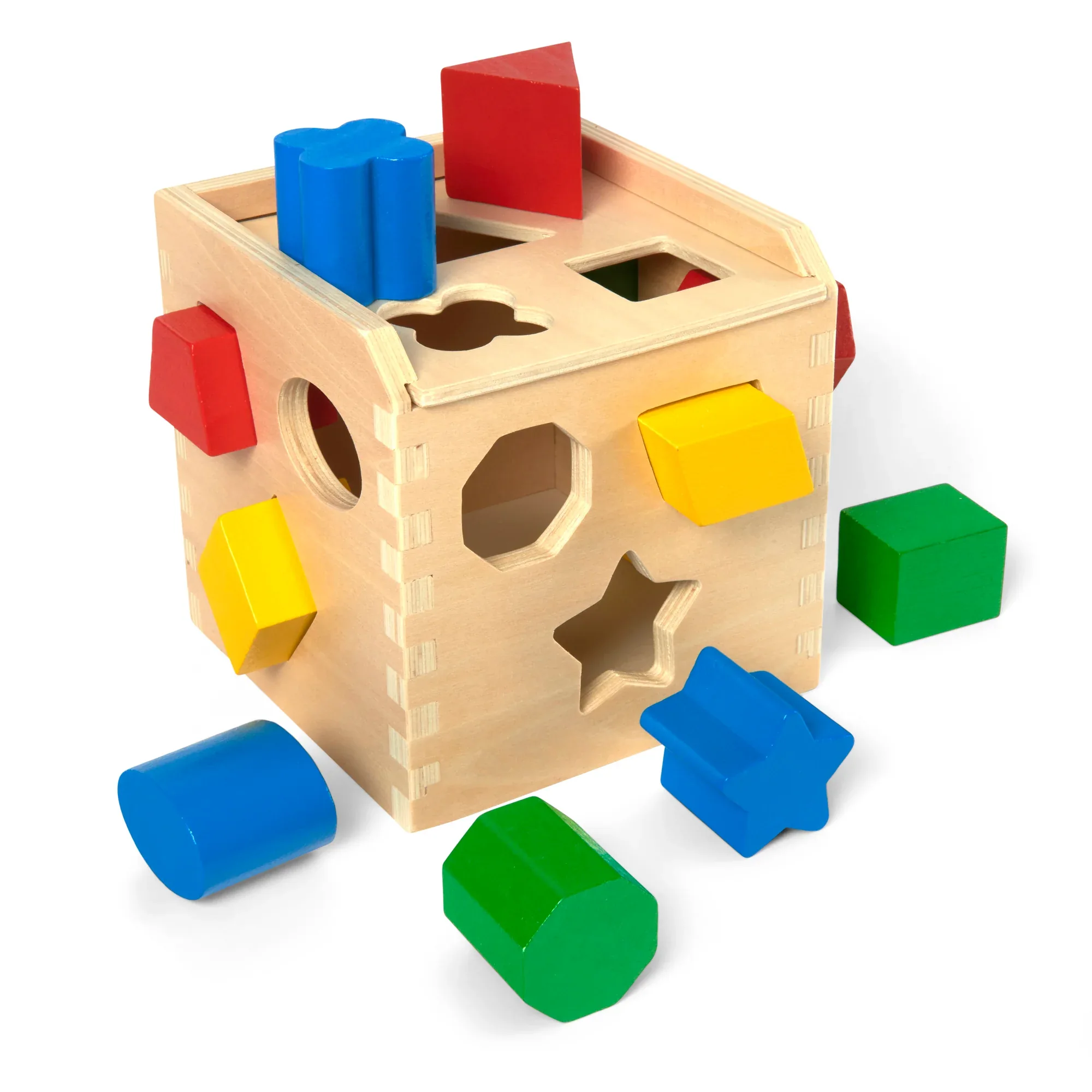
The shape sorting cube is one of the most effective cognitive development toys ever designed, and Melissa & Doug's version is the best-made on the market. Matching shapes to holes builds the problem-solving and fine motor skills that underpin later math and reading readiness. At under $22 with essentially indestructible construction, it's the easiest recommendation on this list.
Read the full Melissa & Doug Shape Sorting Cube review →Pros
- Directly targets problem-solving and spatial reasoning — among the highest developmental payoff toys at this price
- Solid hardwood construction that survives being thrown, chewed, and dropped on tile
- Pieces store inside the cube when done — genuinely easy to tidy up
Cons
- Simpler concept than building sets, so engagement window narrows once kids master it around age 3
- Only 12 shapes — some kids want more variety after they've sorted them a hundred times
Score Breakdown
Developmental9.7Engagement8.8Safety9.8Durability9.5Value9.6Specs
- Age Range
- 1–3
- Pieces
- 12 shapes
- Material
- Wood
- Brand
- Melissa & Doug
- 3
9.2
$59.99Best for STEM Play
Best for STEM Play
$59.99at Amazon Associates
- Magnetic connection makes 3D building accessible to toddlers who can't yet manage complex interlocking systems
- Introduces geometry and spatial reasoning through play that feels like discovery, not instruction
Magnetic tiles that bridge open-ended building and early geometry — and they genuinely last
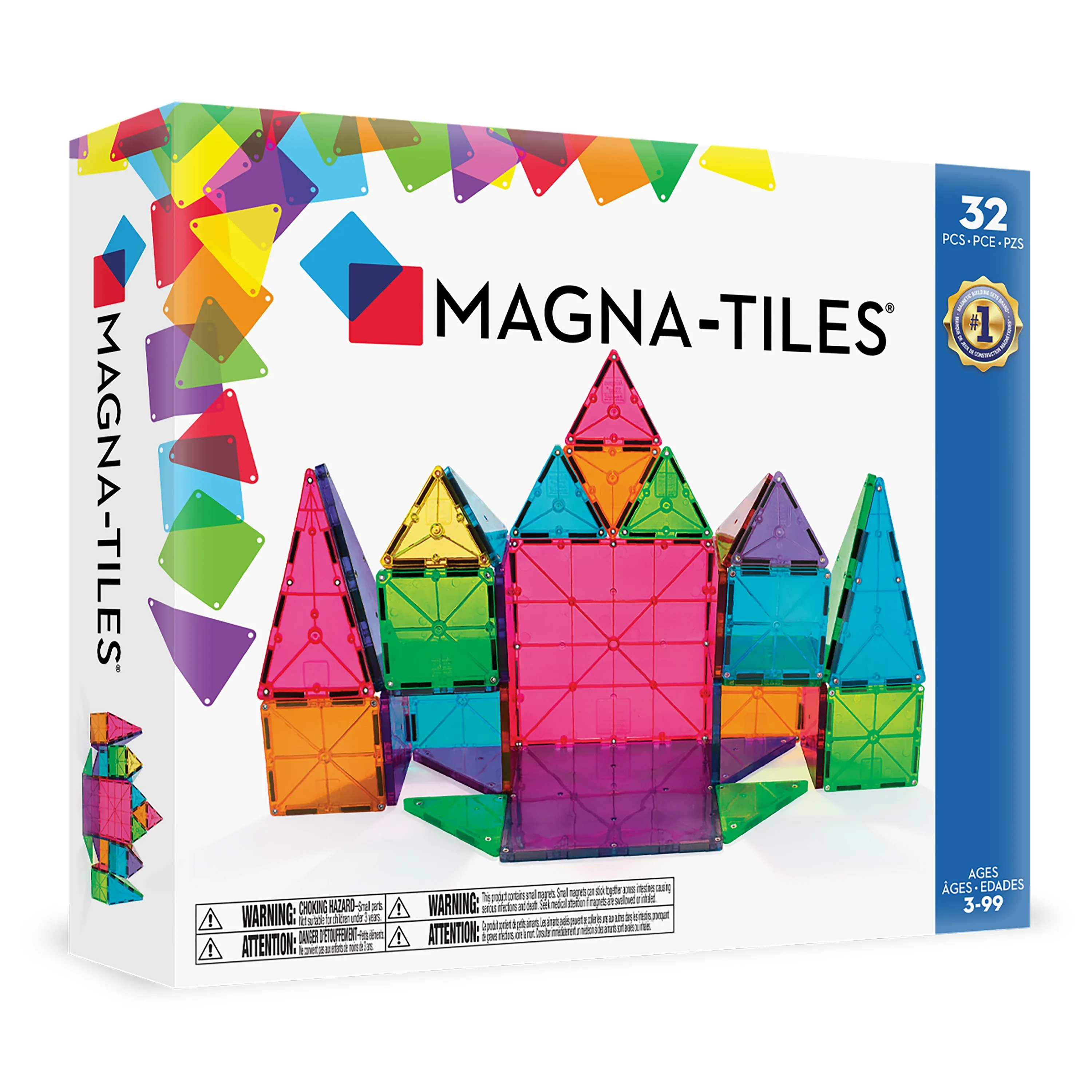
Magna-Tiles are the closest thing to a toy that feels like play for a toddler but functions like a geometry lesson. The magnetic edges let kids build structures that would be impossible with traditional blocks, which creates genuinely novel problem-solving challenges. The 32-piece set is the right starting size — big enough to build something meaningful, small enough to justify upgrading later.
Read the full Magna-Tiles 32-Piece Set review →Pros
- Magnetic connection makes 3D building accessible to toddlers who can't yet manage complex interlocking systems
- Introduces geometry and spatial reasoning through play that feels like discovery, not instruction
- Tiles are compatible across sets and brands — the collection compounds in value over time
Cons
- Higher price point than most toddler toys — the value case is strongest if you buy more tiles over time
- Best suited for 3+ due to small magnetic pieces; not appropriate for early toddlers who mouth everything
Score Breakdown
Developmental9.6Engagement9.4Safety9.6Durability9.3Value8.4Specs
- Age Range
- 3+
- Pieces
- 32 magnetic tiles
- Material
- Plastic + magnets
- Brand
- Magna-Tiles
- 4
8.9
$98.99Best Active Play Toy
Best Active Play Toy
$98.99at Amazon Associates
- Gets toddlers outside and moving — supports gross motor development and the neighborhood social rituals that matter
- Steel and hardwood construction that genuinely lasts decades — many parents pull out the same wagon they rode in as children
The iconic American wagon that has been getting toddlers outside for over a century
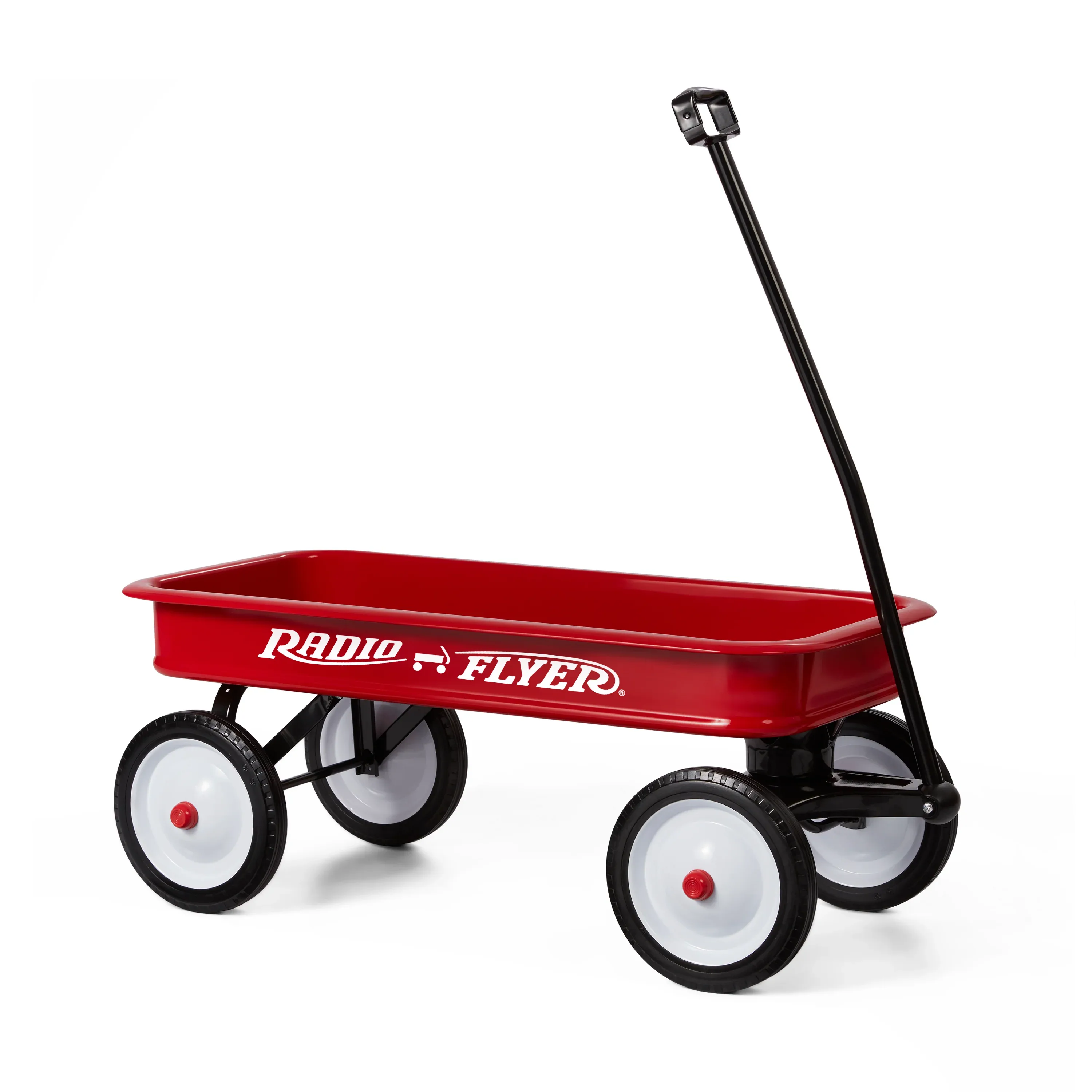
The Radio Flyer wagon is one of the few toddler toys with a genuine multigenerational track record — it is not a trend, it is infrastructure. The steel body and hardwood slats hold up to decades of use, which means this is often a one-time purchase that outlasts childhood entirely. More importantly, it is a reason to go outside, which is the best developmental activity a toddler can do.
Read the full Radio Flyer Classic Red Wagon review →Pros
- Gets toddlers outside and moving — supports gross motor development and the neighborhood social rituals that matter
- Steel and hardwood construction that genuinely lasts decades — many parents pull out the same wagon they rode in as children
- Doubles as a hauling tool for kids who want to move rocks, toys, and anything else they find important
Cons
- Higher price than plastic alternatives, though the durability premium pays off over the long run
- No seatbelt — parents need to supervise closely with younger or more adventurous toddlers
Score Breakdown
Developmental8.7Engagement9.2Safety9.3Durability9.7Value8.8Specs
- Age Range
- 1.5–5
- Capacity
- 150 lbs
- Material
- Steel + wood
- Brand
- Radio Flyer
- 5
8.6
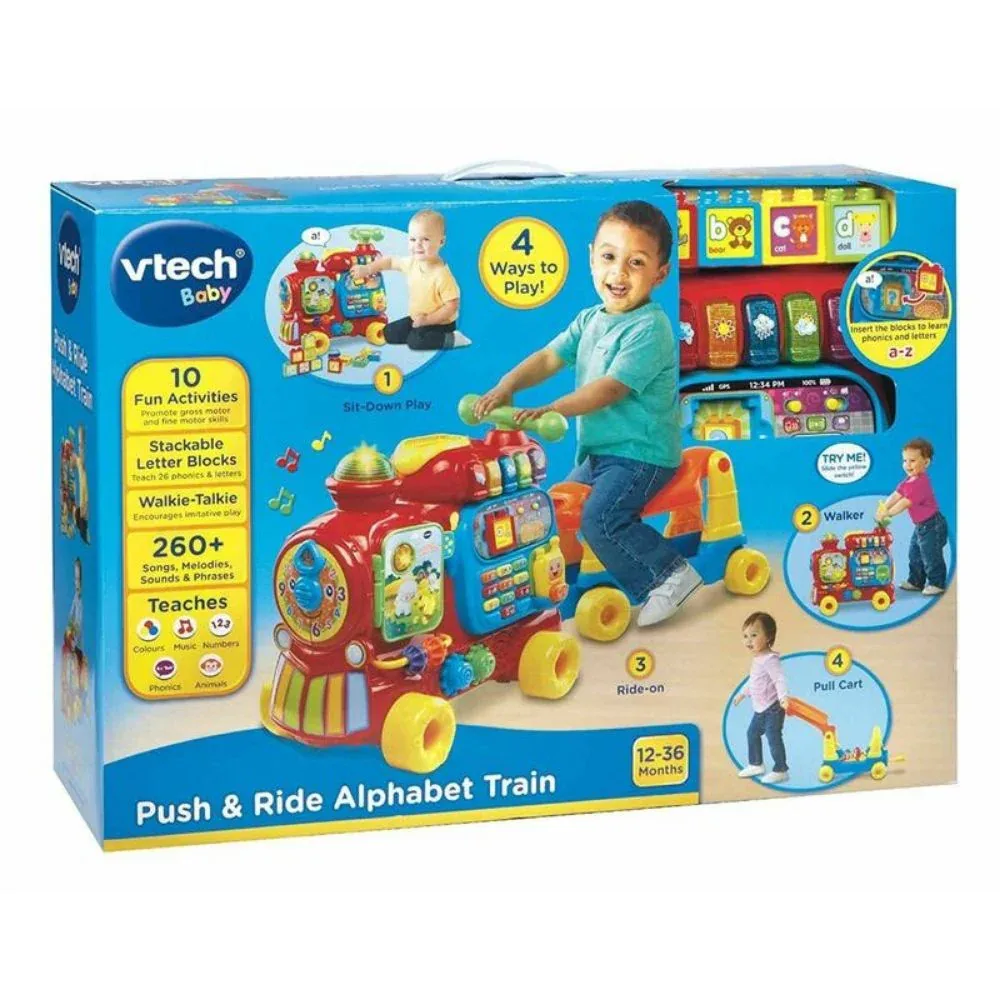
$44.99Best for Learning Play
Best for Learning Play
$44.99at Amazon Associates
- Supports walking development as a push toy while layering in letters, numbers, and music — two developmental goals at once
- Interactive buttons hold attention across the 1–3 age range as kids graduate from walking aid to seated play
An interactive push toy that teaches letters, numbers, and songs while supporting first steps
The VTech Alphabet Train works especially hard for its price because it serves two developmental purposes at once: supporting the physical milestone of learning to walk and introducing the cognitive building blocks of literacy and numeracy. The transition from push toy to sit-and-play keeps it relevant longer than most single-function toys at this age. It is not the most durable toy on this list, but the value per month of active use is strong.
Read the full VTech Push and Ride Alphabet Train review →Pros
- Supports walking development as a push toy while layering in letters, numbers, and music — two developmental goals at once
- Interactive buttons hold attention across the 1–3 age range as kids graduate from walking aid to seated play
- Songs and letter prompts are genuinely educational without being grating to adult ears
Cons
- Electronic components are the weak point — the speaker and button contacts are more fragile than the rest of the toy
- Battery dependency means parents need to keep AAs on hand; the toy goes silent without them
Score Breakdown
Developmental9.1Engagement8.9Safety9.5Durability8.4Value8.8Specs
- Age Range
- 1–3
- Batteries
- 2 AA
- Brand
- VTech
- Features
- Letters, numbers, songs, push-to-walk
Toddler Toys Buying Guide
Why be picky about toddler toys?
Toddlers learn through play — it’s their full-time job — and the toys that teach most are rarely the loudest ones. The American Academy of Pediatrics makes the case that simple, open-ended toys beat flashing electronic ones for building language, problem-solving, and imagination. Toddlers are also spectacularly hard on their possessions, so the difference between a toy that survives to the second kid and one that’s broken by Friday is real money. A few excellent toys beat a room full of forgettable ones.
What to look for
Open-ended play value
The best test of a toy: can it be played with more than one way? Blocks, tiles, and push toys that become something new each time outlast single-trick toys by years.
The 90/10 rule
Favor toys where your child does 90% of the work and the toy does 10 — stacking, sorting, building, pushing. If the toy performs while the child watches, it’s entertainment, not play.
Age labels are safety, not marketing
The age range on the box reflects choking-hazard testing and federal small-parts rules, not cleverness. With a child under 3 — or an under-3 sibling in the house — treat small-parts warnings as hard limits.
Toddler-proof durability
Toys get thrown, stood on, and gnawed. Solid wood, thick plastic, and brands with reputations for surviving multiple children are worth their price premium.
Room to grow
The best toddler toys have a low floor and a high ceiling: playable at 18 months, still interesting — in more sophisticated ways — at 4 or 5.
Easy to tidy and rotate
Toys that live in a bin or bag actually get put away. Rotating a few toys in and out keeps old ones novel — the free way to double your toy budget.
Our shortlist of 5
- #1 LEGO DUPLO Classic Brick Box — Best Overall
- #2 Melissa & Doug Shape Sorting Cube — Best for Cognitive Development
- #3 Magna-Tiles 32-Piece Set — Best for STEM Play
- #4 Radio Flyer Classic Red Wagon — Best Active Play Toy
- #5 VTech Push and Ride Alphabet Train — Best for Learning Play
Frequently Asked Questions
Are electronic learning toys worth it for toddlers?
Sparingly. The American Academy of Pediatrics points out that toddlers learn language and problem-solving best through hands-on play and back-and-forth with you — features no battery provides. One or two well-chosen interactive toys are fine; a shelf of talking toys mostly teaches button-pressing.
How many toys does a toddler actually need?
Fewer than the toy aisle suggests. A small set of open-ended toys — something to build with, something to push or ride, something to sort or nest, and books — covers every developmental base. Fewer toys out at once tends to produce deeper, longer play.
What should I check before buying secondhand toys?
Three things: no recalls (search CPSC.gov), no small or newly loose parts for under-3s, and no chipped paint on older painted toys. Sturdy wooden and hard-plastic toys are the safest secondhand bets — and among the best value in all of parenting.
Our Ranking Methodology
Toys evaluated on developmental value, engagement and play longevity, safety and durability, and value relative to cost.
Learn more about how we test and score →