
Best Teen Banking Accounts of 2026
We evaluated the best banking accounts for teenagers on parental controls, learning tools, fees, and real-world financial education features.
Filter Results
Filter Results
Showing 5 of 5 results
- 1
9.5
Best OverallFrom $5.99/month (up to 5 kids)Best Overall
Best Overall
From $5.99/month (up to 5 kids)at Direct
- Real-time store-level spending controls — parents approve or block specific merchants
- Chores, allowance, and savings goals all in one platform
The most comprehensive money app for families
Greenlight is the gold standard for teen financial education. The combination of real-time parental controls, chore management, savings goals, and beginner investing makes it the most complete financial learning platform for teenagers. Worth every penny of the monthly fee.
Read the full Greenlight review →Pros
- Real-time store-level spending controls — parents approve or block specific merchants
- Chores, allowance, and savings goals all in one platform
- Invest feature lets teens buy fractional shares and learn markets
Cons
- Monthly fee required
- Not a full bank — needs to pair with parent's checking account
Score Breakdown
Safety9.7Value9.1Ease9.5Quality9.5Specs
- Monthly Fee
- $5.99–$14.98
- Parental Controls
- Store-level real-time
- Allowance Feature
- Yes
- Investing Feature
- Yes
- Savings
- Up to 5% on goals
- 2
9.2
FreeBest for Building Credit
Best for Building Credit
Freeat Direct
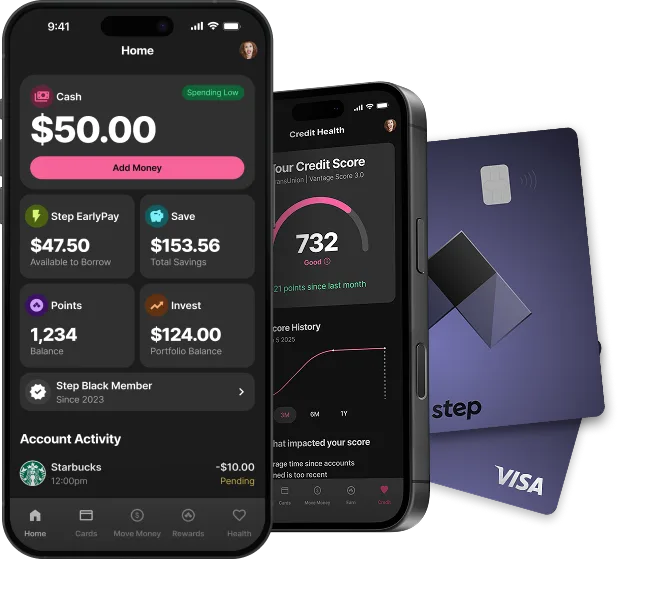
- Free Visa card that builds credit history from day one
- No fees, no credit check, no overdraft possible
Build credit history before college — for free
Step's unique credit-building debit card gives teens a head start on their credit score before they turn 18. By the time they need a student credit card or apartment lease, they'll have an established credit history. The fact that it's completely free makes it a no-brainer addition for any teen.
Read the full Step review →Pros
- Free Visa card that builds credit history from day one
- No fees, no credit check, no overdraft possible
- Automatic savings round-up feature
Cons
- Less robust parental controls than Greenlight
- No chore or allowance management features
Score Breakdown
Safety9.3Value9.8Ease9.4Quality9.1Specs
- Monthly Fee
- $0
- Credit Building
- Yes
- Parental Controls
- Basic
- Allowance Feature
- No
- Savings
- Round-up feature
- 3
8.8
FreeBest for Spending Insights
Best for Spending Insights
Freeat Direct
- Instant spending notifications to parent's phone
- Parental controls let you block specific categories of spending
Real-time spending insights for teens and parents
Current delivers real-time visibility into teen spending without requiring a monthly fee. Parents get instant push notifications for every transaction, can block spending categories, and teens can earn a savings bonus — a solid free alternative to Greenlight.
Read the full Current review →Pros
- Instant spending notifications to parent's phone
- Parental controls let you block specific categories of spending
- Optional monthly savings bonus up to 4% APY
Cons
- Fewer financial education features than Greenlight
- Premium features locked behind paid plan
Score Breakdown
Safety9.1Value9.5Ease9.2Quality8.8Specs
- Monthly Fee
- $0 (basic)
- Parental Controls
- Category-level
- Allowance Feature
- Yes
- Savings
- Up to 4% APY
- Spending Alerts
- Yes
- 4
8.7
Free (requires Chase checking account)Best Bank-Backed Option
Best Bank-Backed Option
Free (requires Chase checking account)at Direct
- Backed by the nation's largest bank — maximum security and trust
- Integrates directly with parent's Chase checking account
Real banking with Chase's backing and parental controls
Chase First Banking is the right call for families already using Chase. It integrates seamlessly with parent accounts, uses Chase's massive ATM network, and provides basic parental controls. The traditional bank backing provides reassurance that fintech startups can't match.
Read the full Chase First Banking review →Pros
- Backed by the nation's largest bank — maximum security and trust
- Integrates directly with parent's Chase checking account
- 16,000+ fee-free Chase ATMs nationwide
Cons
- Requires parents to have a Chase checking account
- Financial education features less developed than fintech competitors
Score Breakdown
Safety9.4Value9.0Ease9.1Quality8.8Specs
- Monthly Fee
- $0
- Parental Controls
- Spending limits, blocked merchant categories
- Allowance Feature
- Yes
- Atm Network
- 16,000+
- Requires Parent Account
- Yes
- 5
8.6
FreeBest for Financial Education
Best for Financial Education
Freeat Direct
- In-app financial education lessons built directly into the banking experience
- No fees at all — completely free for families
Banking that actually teaches teens about money
Copper's integration of financial education lessons directly into the banking app is genuinely clever — teens learn about budgeting and investing in the context of their actual money. The completely free model and 5% savings rate make it the best-value teen banking option.
Read the full Copper review →Pros
- In-app financial education lessons built directly into the banking experience
- No fees at all — completely free for families
- Interest on savings up to 5% APY
Cons
- Smaller company — less brand recognition than Greenlight or Chase
- Fewer parental control options than Greenlight
Score Breakdown
Safety9.0Value9.4Ease9.3Quality8.7Specs
- Monthly Fee
- $0
- Parental Controls
- Basic spending limits
- Financial Lessons
- Yes
- Savings
- Up to 5% APY
- Credit Building
- No




Teen Banking Buying Guide
Why open a bank account for your teen?
A teen account is financial training wheels with real money: a debit card that works everywhere, parental visibility and controls, and the safe space to make ten-dollar mistakes before the stakes have zeros on them. Teens who manage their own money — earning, budgeting, occasionally blowing it — reach college with judgment their peers are missing. The modern teen accounts add allowance automation, savings goals, and even beginner investing, all under your oversight.
What to look for
FDIC insurance behind the app
Fintech teen apps hold deposits through partner banks — confirm deposits are FDIC-insured through a named bank. It’s stated plainly in the fine print of every legitimate service.
Parental controls with a philosophy
Real-time alerts, spending limits, and card lock are standard; the differences are in flexibility — per-merchant controls, chore-based allowance, whether the teen can see and learn or just spend.
Fees, brutally compared
Several excellent teen accounts are completely free; others charge monthly subscriptions. A $5.99 monthly fee is $72 a year of your teen’s savings — make the paid features prove themselves.
Teen-first design
The account teaches nothing if your teen won’t open the app. Savings goals they set, spending insights they understand, and a card they aren’t embarrassed by all matter.
A graduation path
The best teen accounts convert to full accounts at 18 — or at least export a habit. Ask what happens at graduation: credit building, investing access, and account continuity beat starting over.
Cash reality
Teens still get birthday cash. Check ATM access and how cash deposits work — some app-based accounts make depositing cash surprisingly hard.
Our shortlist of 5
- #1 Greenlight — Best Overall
- #2 Step — Best for Building Credit
- #3 Current — Best for Spending Insights
- #4 Chase First Banking — Best Bank-Backed Option
- #5 Copper — Best for Financial Education
Frequently Asked Questions
At what age should my teen get a debit card?
Most families start between 12 and 15, when the teen has real money flowing (allowance, first jobs, gift cash) and real chances to spend it independently. The right moment is less about age than about surface area: once your kid regularly handles money out of your sight, supervised practice with a card beats an envelope of twenties.
Are these fintech teen accounts actually safe?
The legitimate ones hold your money at FDIC-insured partner banks — insured up to the standard $250,000 — and add the controls traditional banks lack. The practical safety layer is you: real-time transaction alerts and instant card-lock mean you see problems the moment they happen, which is more oversight than most adult accounts get.
Free account or paid subscription — is Greenlight-style pricing worth it?
Paid plans earn their fee when you’ll use the family features — multiple kids, chore-based allowance automation, investing education. A single teen who mainly needs a card and alerts is well served by the free options. Price the subscription against your actual usage, and remember the free competitors are genuinely good.
Our Ranking Methodology
Teen banking products were evaluated on parental control features, financial education and habit-building tools, fees, ATM access, and ease of use for both parent and teen.
Learn more about how we test and score →