Best Baby Monitors for Newborns in 2026
March 1, 2026 · ParentRankings Editors
Our Top Pick
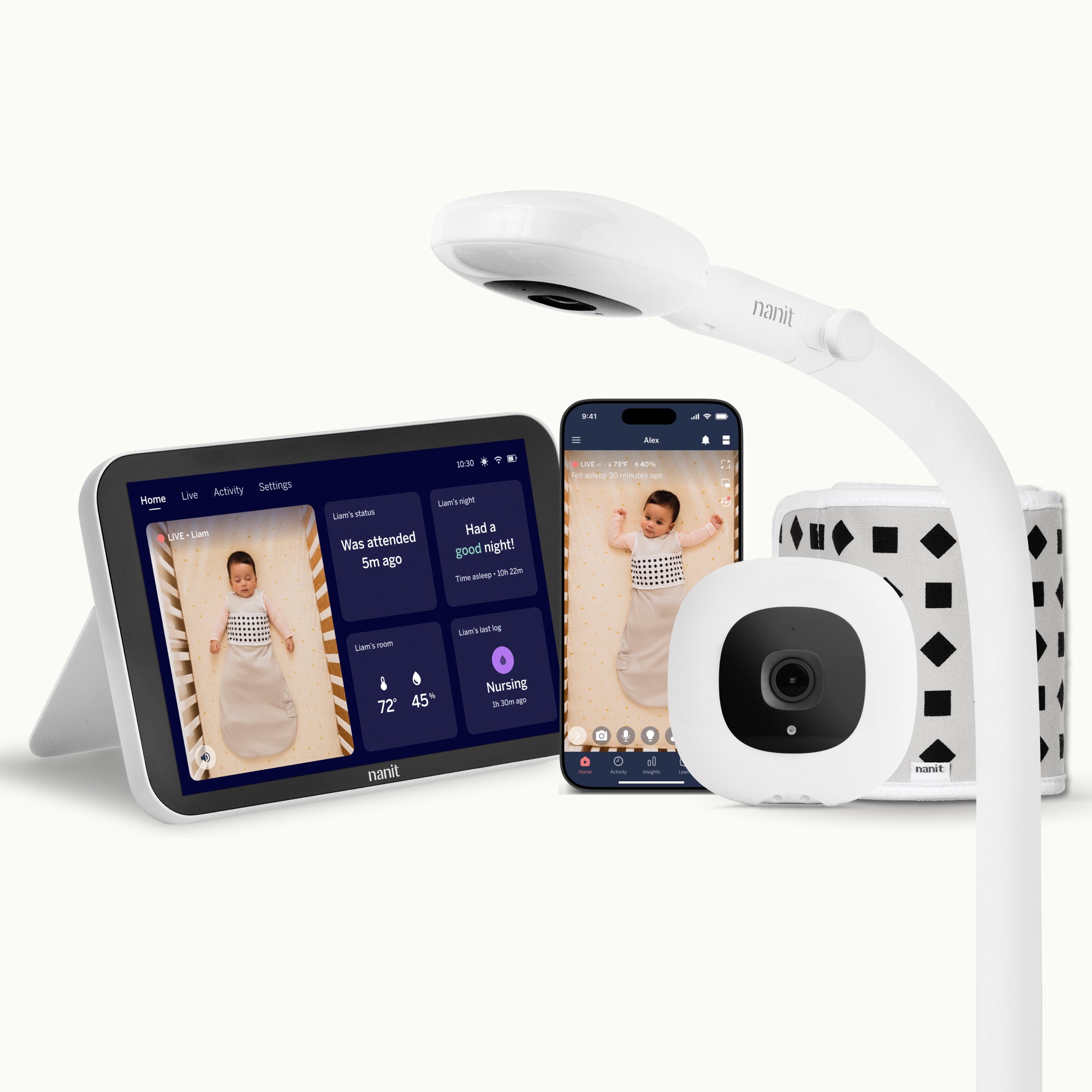
Nanit Pro Camera
The Nanit Pro's computer vision-based breathing motion monitoring and 1080p HD night vision make it the most complete newborn monitor on the market for parents who want smart reassurance without wearables.
Best Baby Monitors for Newborns in 2026
In February 2026, the CPSC recalled approximately 81,800 units of the Babysense MaxView Baby Monitor (model VBM55) after reports of the display unit overheating and sparking during charging, posing a fire hazard. Units were sold on Amazon, Walmart, and Babylist from January 2023 through December 2025. If you own one, stop using it now and visit CPSC.gov for return and remedy instructions. It is not a minor inconvenience notice. It is a fire hazard, in a nursery, near a sleeping newborn.
That recall is a useful reset for anyone shopping right now. Baby monitors are easy to treat as commodity purchases, something you grab off a registry checklist without much scrutiny. But hardware quality, signal security, and accurate breathing detection are not features to comparison-shop casually. The monitor sitting six inches from your baby's crib should be something you've actually vetted. That's exactly what we did.
We evaluated five monitors across safety, video clarity, breathing detection, ease of use, privacy, and total cost of ownership. Every pick on this list earned a safety score of at least 8.8 out of 10. Nothing below that threshold made the cut, full stop.
What to Look for in a Baby Monitor for Newborns
Safety and build quality should be your starting point, not an afterthought. The Babysense recall is a concrete reminder that a monitor's charging design, thermal management, and component quality are as important as its feature list. We looked hard at hardware reliability and build consistency across every pick here. A monitor that sparks is worse than no monitor at all.
Video clarity and night vision matter most between midnight and 5am, which is exactly when you're least equipped to interpret a grainy image. A monitor that shows you a gray smear in the dark is not reassuring, it's maddening. We required at least 720p resolution from every pick, with strong infrared night vision performance. Cameras with 1080p HD resolution scored higher, because when you're trying to assess whether your baby has shifted position or whether their chest is rising, sharper detail is not a luxury.
Breathing and movement detection is the feature category that separates a basic camera from a genuine newborn monitor. Standard audio-video units will tell you if your baby is crying. What most new parents actually want to know, at 3am, is whether their baby is breathing. Monitors with computer vision-based breathing motion detection or wearable pulse oximetry scored significantly higher on our safety dimension. Neither technology replaces safe sleep practices or pediatric guidance, but both can meaningfully reduce the anxiety that keeps parents from sleeping at all.
Ease of setup and daily use sounds like a minor consideration until you're unboxing a monitor at 11pm the night before your due date, or trying to adjust settings with one hand while holding a newborn with the other. Our ease scores reflect real-world setup time, app reliability, and how intuitive the interface is under conditions of severe sleep deprivation. Finicky pairing processes and unintuitive menus are disqualifying.
Value and subscription costs require honest math. The sticker price is only part of what you're committing to. Some of the most capable monitors on this list require annual subscriptions to unlock their best features, which can add $100 or more per year over the time you'll actually use them. Our value scores factor in total cost of ownership across the newborn and infant period, not just what you pay at checkout.
WiFi versus dedicated signal privacy is a genuine trade-off, not a marketing distinction. WiFi monitors offer remote viewing, smart integrations, and richer data. They also introduce network vulnerability. Dedicated encrypted signal monitors, those using FHSS or DECT technology, have zero remote access risk because there is no internet connection to compromise. The right choice depends on what you value more: smart features or airtight privacy. We have strong picks in both categories.
Who Should Buy
If you want the most complete newborn monitor available, with breathing motion tracking, sleep analytics, and sharp 1080p HD night vision, our top overall pick is the one to get. The computer vision-based breathing detection is genuinely useful, and the sleep data becomes a surprisingly practical tool for building sleep habits over the first year. The annual subscription for full analytics access is a real cost to factor in, but for parents who want smart reassurance without putting anything on their baby, it leads the category.
If you have a preemie, a baby with cardiac or respiratory concerns, or you simply need the highest level of physiological monitoring a consumer device can provide, our pick for peace of mind is the only option that tracks real-time heart rate and blood oxygen levels and alerts you to abnormal readings. Nothing else on this list does that. The wearable sock form factor is not for everyone, but for the families who need it, it is irreplaceable.
If you want a reliable dedicated screen monitor without WiFi, our best dedicated screen pick delivers a large 5-inch display, pan-tilt-zoom control, and a completely private encrypted signal for around $150 with no subscription ever. For parents who don't want their baby monitor living on their phone, this is the practical, no-drama choice.
If privacy is your top priority and you want zero app dependency or cloud exposure, our privacy-first pick has no WiFi connection to compromise and no cloud to breach. It just works, every night, without asking anything of your network or your patience.
And if you're watching the budget closely, our large-screen value pick offers a 5-inch display, a 12-hour parent unit battery that genuinely outlasts the night shift, and a one-time purchase price with no ongoing fees. It is the most honest value on the list.
More Picks We Love
Our full ranking, scored by our editorial team on safety, value, ease of use, and quality.

Owlet Dream Sock + Cam
No other consumer monitor matches the Owlet Dream Sock's hospital-grade pulse oximetry — real-time heart rate and oxygen alerts make it the definitive choice for families with preemies or elevated health concerns.

Motorola VM75
The Motorola VM75 delivers a large 5-inch display, pan-tilt-zoom control, and a completely private encrypted signal with no WiFi required — all for $150 and zero subscription fees.

Infant Optics DXR-8 Pro
The Infant Optics DXR-8 Pro is the privacy-first pick — no WiFi, no app, no hacking risk, and a dedicated parent unit that just works reliably every single night.

Eufy SpaceView
The Eufy SpaceView's 5-inch screen, 12-hour battery life, and zero subscription cost make it the best budget-friendly no-WiFi monitor for parents who want a big, clear picture without ongoing fees.
Frequently Asked Questions
Are baby monitors with breathing tracking actually safe and accurate for newborns?▾
It depends on the type. Camera-based breathing motion monitors like the Nanit Pro use computer vision to detect chest movement — they're a helpful reassurance tool but are not medical devices and should not replace safe sleep practices. Wearable pulse oximeters like the Owlet Dream Sock track blood oxygen and heart rate and are closer to clinical-grade monitoring, though they are still consumer products. Neither type is a substitute for pediatric medical advice, but both can meaningfully reduce nighttime anxiety for new parents.
Is it safer to use a WiFi baby monitor or a dedicated no-WiFi monitor?▾
No-WiFi monitors that use encrypted FHSS or DECT signals — like the Motorola VM75 and Infant Optics DXR-8 Pro — cannot be accessed remotely and have zero hacking risk, which is a genuine advantage. WiFi monitors offer richer features and smartphone access but require a secure home network and strong passwords to minimize vulnerability. If privacy is your top priority, go no-WiFi. If smart features and remote viewing matter more, choose a reputable WiFi monitor with strong security practices.
What should I do if I own a Babysense MaxView Baby Monitor (model VBM55)?▾
Stop using it immediately. The CPSC issued a recall on February 26, 2026 for approximately 81,800 units of the Babysense MaxView (model VBM55) due to the display unit overheating and sparking during charging, posing a fire hazard. Units were sold on Amazon, Walmart, and Babylist from January 2023 through December 2025. Visit CPSC.gov or the US News recall notice for instructions on how to return the unit and receive a remedy.
Do I need to pay a subscription for a baby monitor to work?▾
Not always. The Motorola VM75, Infant Optics DXR-8 Pro, and Eufy SpaceView all work fully without any subscription — you pay once and that's it. The Nanit Pro requires a $99/year subscription to unlock sleep analytics and full breathing motion data history, though live video works without it. The Owlet Dream Sock requires a subscription for full historical data access as well. Factor these ongoing costs into your budget before buying.
What resolution do I actually need in a baby monitor camera?▾
For most parents, 720p is sufficient to see your baby clearly in a crib, especially with good night vision. However, 1080p HD — offered by the Nanit Pro and Owlet Dream Sock + Cam — provides noticeably sharper detail, which matters when you're trying to assess whether your baby's chest is rising or their position has shifted. If breathing monitoring or fine detail is important to you, prioritize a 1080p camera.
Ready to compare all options?
See every baby monitors ranked by our editors — scored on safety, value, ease of use, and quality.
See all 5 Best Baby Monitors ranked →