
How to Shop for a Car Seat Before the December 2026 Side-Impact Rule
October 19, 2026 · ParentRankings Editors
Our Top Pick
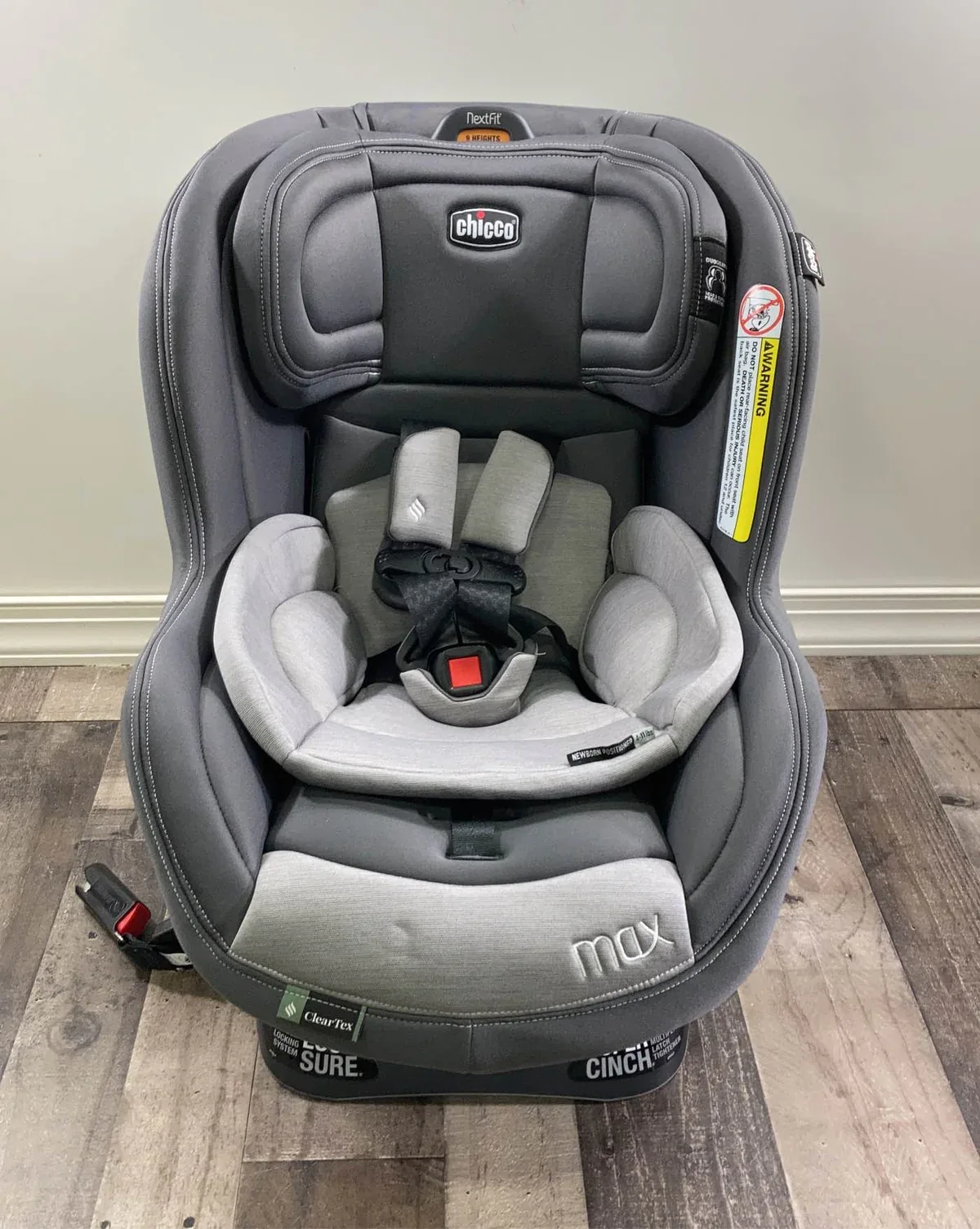
NextFit Max ClearTex
A good fit if a solid LATCH install is your biggest worry; confirm the date of manufacture and side-impact claim on the box of the unit you get.
On October 9, 2026, a NHTSA final rule took effect that makes December 5, 2026 the date car seats must meet the federal side-impact standard, known as FMVSS 213a. December 5 is also the date the updated frontal crash standard, FMVSS 213b, replaces the older FMVSS 213. The rule was published in the Federal Register on September 9, 2026.
If you are buying a car seat this fall, or a relative is buying one as a holiday gift, this changes what is worth checking on the box. It does not mean the seat in your car right now is unsafe or illegal. This guide covers what the rule does, how to read a car seat label, which limits changed, and when a replacement actually makes sense.
This guide is by the ParentRankings Editorial Team. Ranked by parents. For parents. We may be paid by companies we feature. This may influence rankings.
Why this is a how-to, not another Top 5
Our convertible car seat category page already has the shortlist. This post is about the rule change and the checks to make before you buy any seat, including ones that are not on our list. The picks below show how those checks apply to real seats. They are not a new ranking.
What changed on October 9
The side-impact standard was first finalized in June 2022 with a compliance date of June 30, 2025. A group of car seat makers with smaller market share asked for more time. They said the outside labs they rely on for sled testing were overbooked and that results varied from lab to lab. In July 2025, NHTSA paused enforcement while it considered the request. The September 2026 final rule makes the delay official and moves the compliance date to December 5, 2026.
Two larger makers, Graco and Dorel, opposed the delay. In their comments, they said most of their seats already met the side-impact standard and that big retailers had been buying certified seats since fall 2024. NHTSA's cost analysis assumed that all applicable seats from large makers, about half from mid-size makers, and none from small makers would be certified before the deadline.
The rule also made a few narrower changes:
- School bus restraints are exempt from the side-impact test, as long as they carry the required school bus label.
- Forward-facing seats are no longer side-impact tested with the 12-month-old dummy. The updated rules do not allow forward-facing seats to be recommended for children under 26.5 pounds, so testing them with a 22-pound dummy no longer made sense.
- Labels for school bus restraints were updated to describe how they mount to the bus seat.
When NHTSA finalized the side-impact standard in 2022, it estimated the rule would save about 3.7 lives and prevent about 40.9 serious injuries each year. The agency said most of that benefit is still being realized, because most seats sold by large retailers are already certified.
What the side-impact standard covers
The test simulates a near-side crash in a small passenger car, where the impact comes on the door closest to the child. It applies to add-on car seats recommended for children in a weight range that includes weights up to 40 pounds, or a height range that includes heights up to 1,100 millimeters (about 43 inches).
In practice that covers infant seats, convertible seats, and all-in-one seats in their harnessed modes. Car beds, harnesses, and school bus restraints are excluded. Graco noted in its comments to NHTSA that belt-positioning boosters do not need to meet the side-impact standard.
Step-by-step: how to shop before and after December 5
1. Find the certification claim
Every car seat sold in the U.S. carries a label stating that it conforms to the applicable federal motor vehicle safety standards. For side impact, look on the box, the seat labels, and the product page for a specific claim of testing to FMVSS 213a. If you cannot find one, contact the maker's customer service with the model number before you buy. A clear answer from the company is worth more than a vague "side-impact tested" line on a listing.
2. Check the date of manufacture
Federal safety standards apply by the date a product is made. Seats built before December 5 can stay on store shelves and in warehouses for a while after it. The date of manufacture is printed on a sticker on the seat, usually next to the model number. A seat made in 2025 may be a perfectly good seat, but you should know which rules it was built to before you pay full price.
3. Read the weight and height limits, not just the model name
The new rules shifted some limits. Graco said in its comments that infant carriers certified to the side-impact standard updated their maximum weight to 30 pounds, because a carrier recommended for children over 30 pounds has to be tested with a larger 3-year-old dummy. NHTSA reviewed the market and found the vast majority of infant carriers already list 30 pounds or less, with a small number going to 35. If an older listing shows a higher limit than the current box, this is likely why.
Forward-facing limits matter too. Under the updated frontal standard, seats cannot recommend forward-facing use for children under 26.5 pounds. Pediatric guidance is to keep children rear-facing as long as their seat allows, so for most toddlers the rear-facing weight and height limits are the numbers to compare.
4. Do not replace a seat that is working
A seat made before the deadline is not recalled because of this rule. If your seat fits your child, fits your car, has not been in a crash, is not past its expiration date, and has no open recall, you can keep using it. Check for recalls on NHTSA's recall lookup using the model number and date of manufacture from the label.
5. Skip aftermarket side pads and inserts
It can be tempting to add side-impact pads, head wedges, or strap covers sold separately. Car seat makers generally warn against add-ons that did not come with the seat or are not approved for that model, because those parts were not part of the crash test. Use only what came in the box or what the maker sells for your exact seat.
6. Be careful with used and gifted seats
A hand-me-down seat can be fine, but you need its full history. Ask whether it has ever been in a crash, check the expiration date and date of manufacture, look up recalls, and make sure the labels and manual are still there. If the labels are gone, you cannot confirm what the seat was certified to, and it is better to pass.
7. Register the seat
Fill out the registration card that comes with the seat or register online with the maker. That is how recall notices reach you. Federal rules require car seats to ship with a registration card for this reason.
8. Get the install checked
The safest seat on paper does little if it is installed loosely. Read both the car seat manual and your vehicle manual, and check that the seat moves less than an inch side to side at the belt path. A certified child passenger safety technician can check your install, often for free. NHTSA's website lists car seat inspection stations by ZIP code.
What to check on any convertible car seat this season
Side-impact certification you can confirm. A claim on the box, label, or maker's page that the seat was tested to FMVSS 213a, or a direct answer from customer service.
Date of manufacture. Especially when buying from older stock, a marketplace seller, or a clearance sale.
Rear-facing limits that fit your child. Compare rear-facing weight and height limits, not only the top forward-facing or booster limit.
An install you can get right every time. Built-in belt tensioners, LATCH tighteners, and recline indicators make a tight, level install easier for every caregiver who drives your child.
Fit in your car, expiration, and registration. Measure your back seat, note how many years the seat is good for, and register it the day you open the box.
How these checks apply to seats on our shortlist
None of the notes below are a claim that a specific unit on a store shelf is certified. Check the label and date of manufacture on the seat you actually buy.
You want the easiest LATCH install. The Chicco NextFit Max ClearTex is our Best Overall pick, at about $400 with a 9.4 score. Its SuperCinch LATCH tightener and 9-position recline help with a tight, level install. The tradeoff is a bulky shell that can be tight in small back seats.
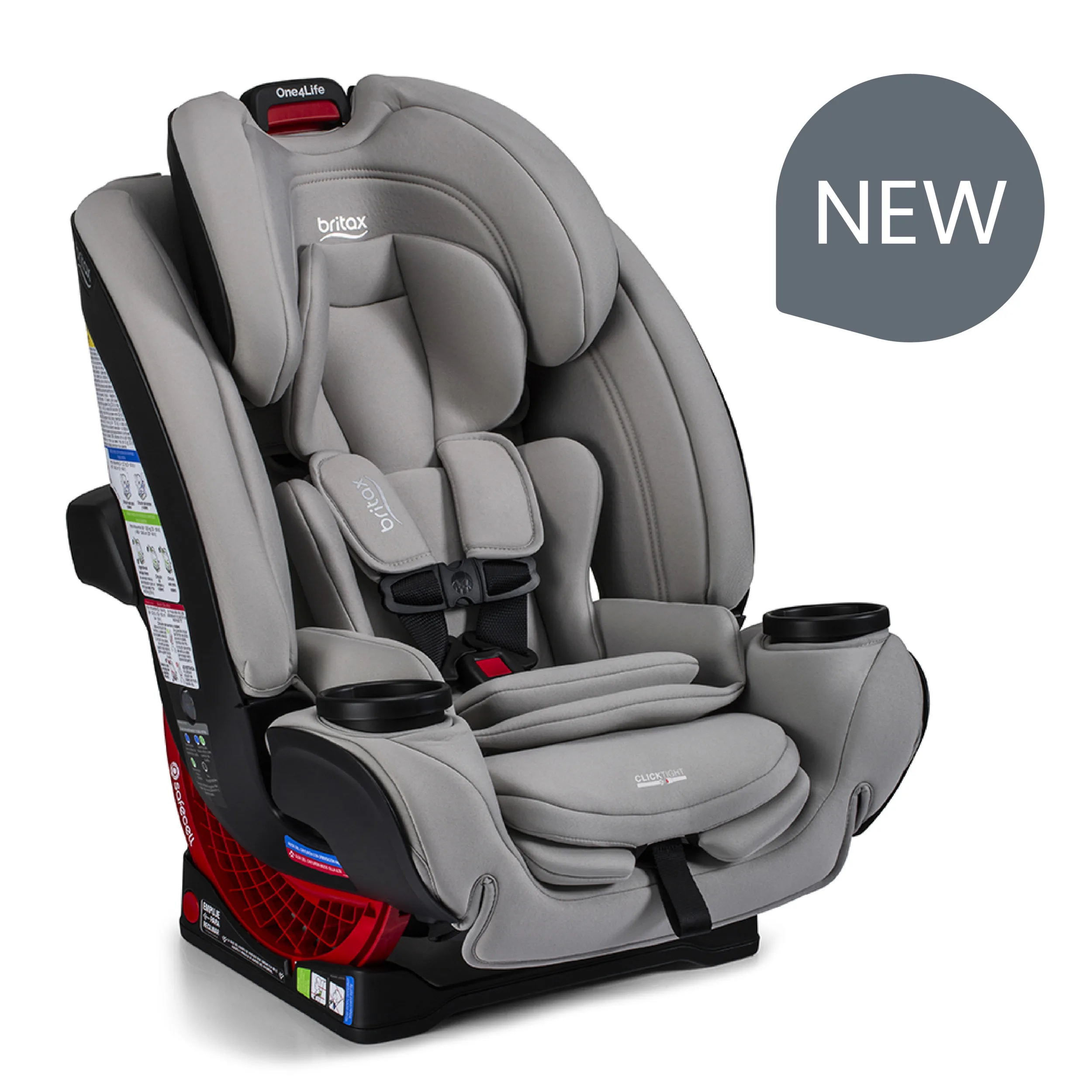
You want one seat from infant to booster. The Britax One4Life ClickTight All-in-One is about $500 with a 9.1 score and converts up to 120 pounds. Its ClickTight belt install is simple. Remember the side-impact standard covers harnessed modes, not booster mode. The seat also weighs about 32 pounds, so it is not one to move between cars often.
You want long rear-facing use for less. The Graco Extend2Fit 3-in-1 is about $200 with an 8.7 score. Its extension panel adds legroom for rear-facing up to 50 pounds. If you buy one from older stock, ask for the date of manufacture. The padding is thinner than premium seats.
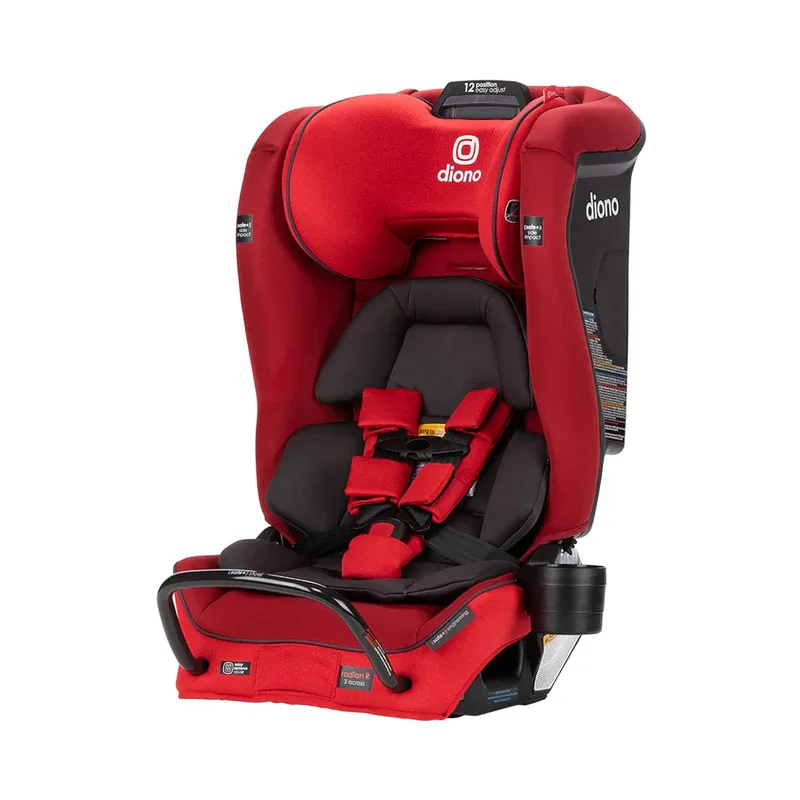
You need to fit three across. The Diono Radian 3RXT SafePlus is about $350 with an 8.5 score and is 17 inches wide. It also folds for travel. Plan extra time for the install, and confirm the certification on the label before you buy.
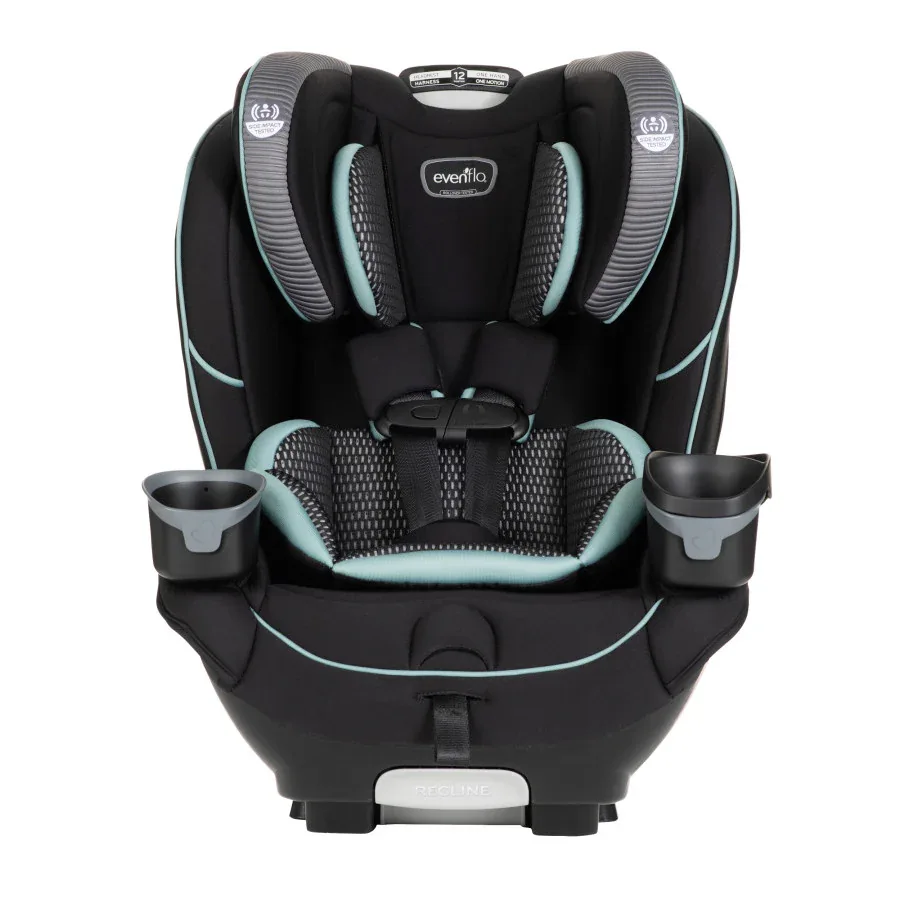
You want an all-in-one on a tighter budget. The Evenflo EveryFit 4-in-1 is about $230 with an 8.1 score. Evenflo markets its own side-impact testing beyond federal requirements. As with any all-in-one, read which modes the claim covers. The fabric feels lower in quality than some seats at similar prices.
Questions to ask before you check out
- What is the date of manufacture on the unit you will ship me?
- Is this model certified to FMVSS 213a, and in which modes?
- What are the rear-facing weight and height limits on the current label?
- How many years until this seat expires?
- Does it come with a registration card?
Retail staff may not know every answer, but the maker's customer service should.
Close the loop
Take a photo of the seat's label showing the model number and date of manufacture. Save your registration confirmation, keep the manual in the seat's storage pocket, and set a reminder for the expiration date. If someone offers you a used seat, run the same checks before it goes in your car.
The December 5 deadline is a good reason to read the label more carefully this season. It is not a reason to throw out a seat that fits and is in good shape. When you want to compare seats side by side, See all 5 Best Convertible Car Seats ranked →.
More Picks We Love
Our full ranking, scored by our editorial team on safety, value, ease of use, and quality.
One4Life ClickTight All-in-One
For families who want one seat from rear-facing through booster; check the rear-facing limits on the current label, since listings can lag behind updated specs.
Extend2Fit 3-in-1
For parents who want long rear-facing use at a lower price; ask for the date of manufacture if you are buying from older stock.
Radian 3RXT SafePlus
For three-across setups or small back seats; plan extra time for the install and confirm certification on the label before you buy.
EveryFit 4-in-1
A lower-cost birth-to-booster option; read which modes the side-impact claim covers, since boosters are outside the standard.
Frequently Asked Questions
What happens to car seats on December 5, 2026?▾
Car seats manufactured on or after December 5, 2026 must meet FMVSS 213a, the federal side-impact standard, and FMVSS 213b, the updated frontal crash standard that replaces FMVSS 213. NHTSA set that date in a final rule published September 9, 2026 that took effect October 9, 2026.
Do I need to replace my current car seat because of the side-impact rule?▾
No. The rule is not a recall. If your seat fits your child and car, has not been in a crash, is not expired, and has no open recall, you can keep using it.
Which car seats does the side-impact standard cover?▾
It covers add-on car seats recommended for children in a weight range that includes weights up to 40 pounds, or a height range that includes heights up to 1,100 millimeters (about 43 inches). Car beds, harnesses, and school bus restraints are excluded. Graco noted in its comments to NHTSA that belt-positioning boosters do not need to meet it.
Why do some infant car seats now max out at 30 pounds?▾
An infant carrier recommended for children over 30 pounds has to be side-impact tested with a larger 3-year-old dummy. Graco told NHTSA that certified carriers updated their labels to a 30-pound maximum, and NHTSA found most carriers on the market list 30 pounds or less.
How do I check if a car seat meets the side-impact standard?▾
Look at the labels on the seat and box and the product page for a claim of testing to FMVSS 213a, and note the date of manufacture. If it is not clear, contact the maker with the model number and manufacture date before you buy.
Are aftermarket side-impact pads a good idea?▾
Car seat makers generally warn against add-ons that did not come with the seat or are not approved for that model, because they were not part of the crash test. Use only parts from the maker.
Ready to compare all options?
See every convertible car seats ranked by our editors — scored on safety, value, ease of use, and quality.
See all 5 Best Convertible Car Seats ranked →